
|
Getting your Trinity Audio player ready... |
If you’ve got sensitive skin, you know the struggle. That tight, itchy feeling after trying a new product. The redness that pops up out of nowhere. The constant guessing game of what will—and won’t—irritate your face.
Here’s the thing: your skin isn’t being difficult. It’s actually trying to protect you. And increasingly, people with sensitive skin are finding relief by switching to natural ingredients. But why do they work better?
Your Skin Recognizes Natural
Think about it this way—human skin has been interacting with plant oils, herbs, and natural extracts for thousands of years. Our skin actually knows what to do with ingredients like aloe vera, chamomile, and coconut oil. They’re familiar.
Synthetic chemicals and harsh additives? Those are relatively new to the game. Ingredients like sulfates, parabens, and synthetic fragrances can confuse your skin’s natural defenses, triggering inflammation and irritation.
Natural vs. Synthetic: What’s the Difference?
| Natural Ingredients | Synthetic Ingredients |
| Recognized by skin for thousands of years | Relatively new to skincare |
| Work with your skin’s natural processes | Can trigger defensive reactions |
| Shorter, simpler ingredient lists | Often long, complex formulations |
| Rich in vitamins, antioxidants, fatty acids | May contain harsh chemicals and fillers |
| Generally gentler on skin barrier | Can strip or damage protective barrier |
| Lower risk of irritation for most people | Common triggers: sulfates, parabens, synthetic fragrance |
| Examples: aloe vera, chamomile, jojoba oil | Examples: sodium lauryl sulfate, artificial dyes, phthalates |
Gentler Doesn’t Mean Weaker
Natural ingredients work with your skin, not against it. Take oatmeal, for example. It’s been used for centuries to calm irritated skin because it contains compounds that actually reduce inflammation. Or calendula, which soothes redness without stripping your skin’s protective barrier.
These ingredients don’t bulldoze through your skin’s defenses—they support them. And for sensitive skin types, that makes all the difference.
Important Link: How to pick oil free facewash that balances skin naturally
Fewer Nasty Surprises
Here’s a major plus: natural skincare products typically have shorter ingredient lists. When you’re reading a label with five recognizable ingredients instead of thirty unpronounceable chemicals, it’s easier to pinpoint what works for you (and what doesn’t).
Plus, you’re less likely to encounter common irritants like synthetic fragrances, which are among the top triggers for sensitive skin reactions.
The Moisture Factor
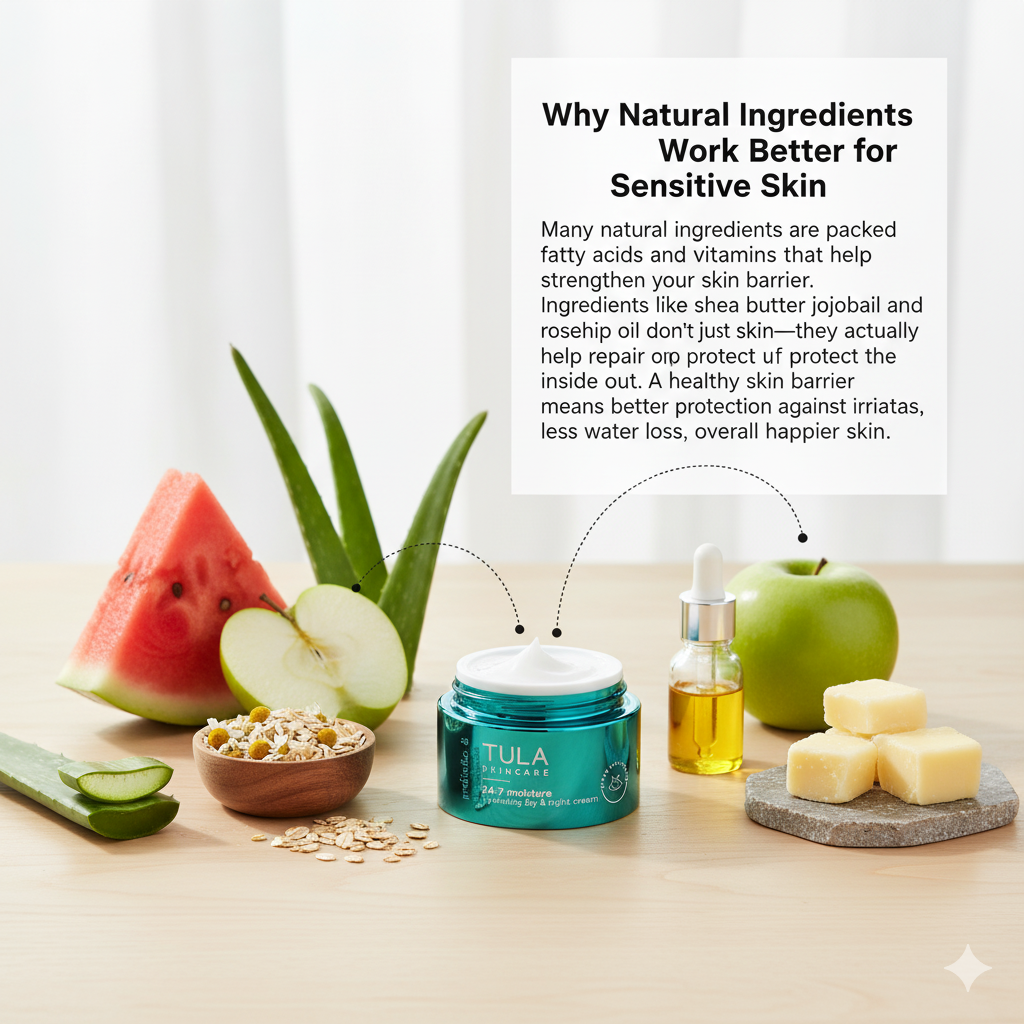
Many natural ingredients are packed with fatty acids and vitamins that help strengthen your skin barrier. Ingredients like shea butter, jojoba oil, and rosehip oil don’t just sit on top of your skin—they actually help repair and protect it from the inside out.
A healthy skin barrier means better protection against irritants, less water loss, and overall happier skin.
The Right Moisturizer Makes All the Difference
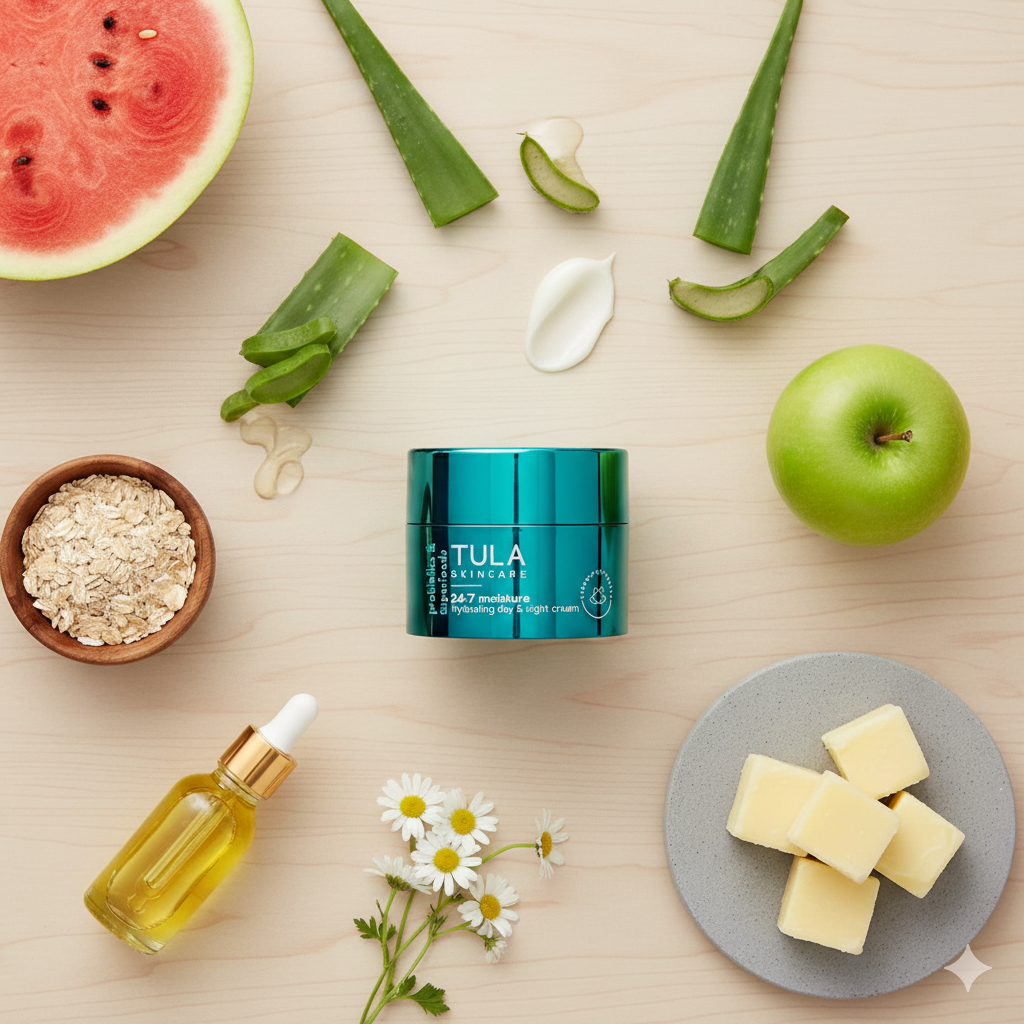
When it comes to keeping sensitive skin happy and hydrated, choosing the right moisturizer is crucial. A quality hydrating day and night cream formulated with natural ingredients can provide round-the-clock comfort without the irritation.
Featured Product: TULA 24-7 Hydrating Day & Night Cream
Hydrating Day & Night Cream – Nourishing Moisturizer for Face
Keep your skin hydrated and balanced all day and night with TULA’s 24-7 Hydrating Day & Night Cream. Infused with watermelon and apple extracts, this nourishing moisturizer delivers long-lasting hydration, smooths texture, and promotes a healthy, radiant glow.
Key Benefits:
- 24-hour hydration for day and night use
- Enriched with watermelon and apple extracts
- Smooths skin texture
- Promotes a healthy, radiant complexion
- Gentle formula suitable for sensitive skin
Look for a cream that delivers deep hydration while remaining gentle enough for daily use. The best formulas lock in moisture, calm redness, and strengthen your skin’s protective barrier—all without harsh chemicals that can trigger sensitivity. Whether you’re starting your day or winding down at night, a good natural moisturizer works continuously to keep your skin balanced, comfortable, and glowing.
Listen to Your Skin
Of course, natural doesn’t automatically mean perfect for everyone. Some people are allergic to certain plant extracts or essential oils. The key is paying attention to how your skin responds.
Start slow, patch test new products, and give your skin time to adjust. But for many people with sensitive skin, making the switch to natural ingredients is like finally speaking their skin’s language.
Your skin knows what it needs. Sometimes the best solution is the simplest one—and the one that’s been around the longest.
FAQs
Are natural products always safe for sensitive skin?
Not always. While natural ingredients are generally gentler, some people can be allergic to specific plant extracts or essential oils. Always patch test new products on a small area first, even if they’re natural. Also, essential oils can be irritating in high concentrations, so look for products where they’re properly diluted.
How long does it take to see results with natural skincare?
Give it at least 2-4 weeks. Natural ingredients work more gently than harsh chemicals, so the results are gradual. Your skin needs time to adjust and repair. If you’re switching from conventional products, you might even experience a brief adjustment period as your skin recalibrates.
What natural ingredients are best for sensitive skin?
Some tried-and-true options include aloe vera (soothing and hydrating), chamomile (anti-inflammatory), oatmeal (calming), calendula (healing), jojoba oil (mimics skin’s natural oils), and shea butter (moisturizing without clogging pores). Look for products with minimal ingredients featuring these gentle superstars.
Can natural products still have preservatives?
Yes, and they should! Preservatives prevent bacterial growth and keep your products safe to use. Natural preservatives include vitamin E, rosemary extract, and radish root ferment. A product without any preservation system can actually be dangerous, as bacteria can grow and cause infections.
Are natural products more expensive?
Sometimes, but not always. Quality natural ingredients can cost more to source and process. However, many affordable natural brands exist, and you might actually save money in the long run by not buying products that irritate your skin and end up in the trash.
Should I use the same moisturizer for day and night?
You can! A quality hydrating day and night cream is designed to work both times. However, some people prefer a lighter formula during the day (especially under makeup) and a richer cream at night for deeper repair. Listen to your skin and adjust based on what feels comfortable.
What makes watermelon and apple extracts good for skin?
Watermelon extract is rich in vitamins A, B6, and C, along with amino acids that help hydrate and soothe the skin. Apple extract contains natural fruit acids and antioxidants that gently exfoliate, brighten, and protect against environmental damage. Both are excellent natural ingredients for maintaining healthy, glowing skin.

Best Amazon Beauty & Grooming Product Reviews
