
|
Getting your Trinity Audio player ready... |
Table of Contents
Most “best deodorant” roundups fall into one of two traps. Either they read like a fragrance catalogue jasmine here, sandalwood there with no explanation of why a scent fades or lingers. Or they get so clinical about sweat ducts and antiperspirant chemistry that the actual point (you want to smell good, reliably, without thinking about it) gets buried. This guide sits in the middle: real science on why some deodorants hold their scent and others don’t, paired with a practical way to actually choose one for your skin, your climate, and your routine.

The Real Reason Your Deodorant Stops Smelling Good by 3 P.M.
It’s tempting to blame a weak formula when a scent disappears, but three separate factors are usually at play, and most people are only fixing one of them.
Fragrance quality and structure. A scent built like a real perfume with distinct top, middle, and base notes evolves throughout the day instead of vanishing all at once. Cheaper formulas often rely almost entirely on top notes, which smell strong for the first hour and then simply run out of anything left to release.
Sweat, not fragrance, is the actual battleground. Sweat on its own barely smells like anything. The odour most people associate with body odour comes from bacteria on the skin breaking that sweat down. A deodorant that only adds fragrance is racing against a growing bacterial process; an antiperspirant that also reduces how much sweat reaches the skin is starving that process at the source. This is the single biggest reason two products with equally “nice” scents can perform completely differently by the afternoon.
Format changes how fragrance sits on skin. A stick deposits product in a layer that can sit unevenly, especially over hair. A spray disperses fast and just as fast lets fragrance molecules escape into the air rather than your skin. Lotion or roll-on formats tend to absorb rather than sit on the surface, which is part of why they’re increasingly favoured by brands chasing all-day scent claims.
Deodorant vs. Antiperspirant: Which One Actually Smells Better, Longer
This is the distinction that most scent guides skip entirely, and it matters more than the fragrance name on the label.
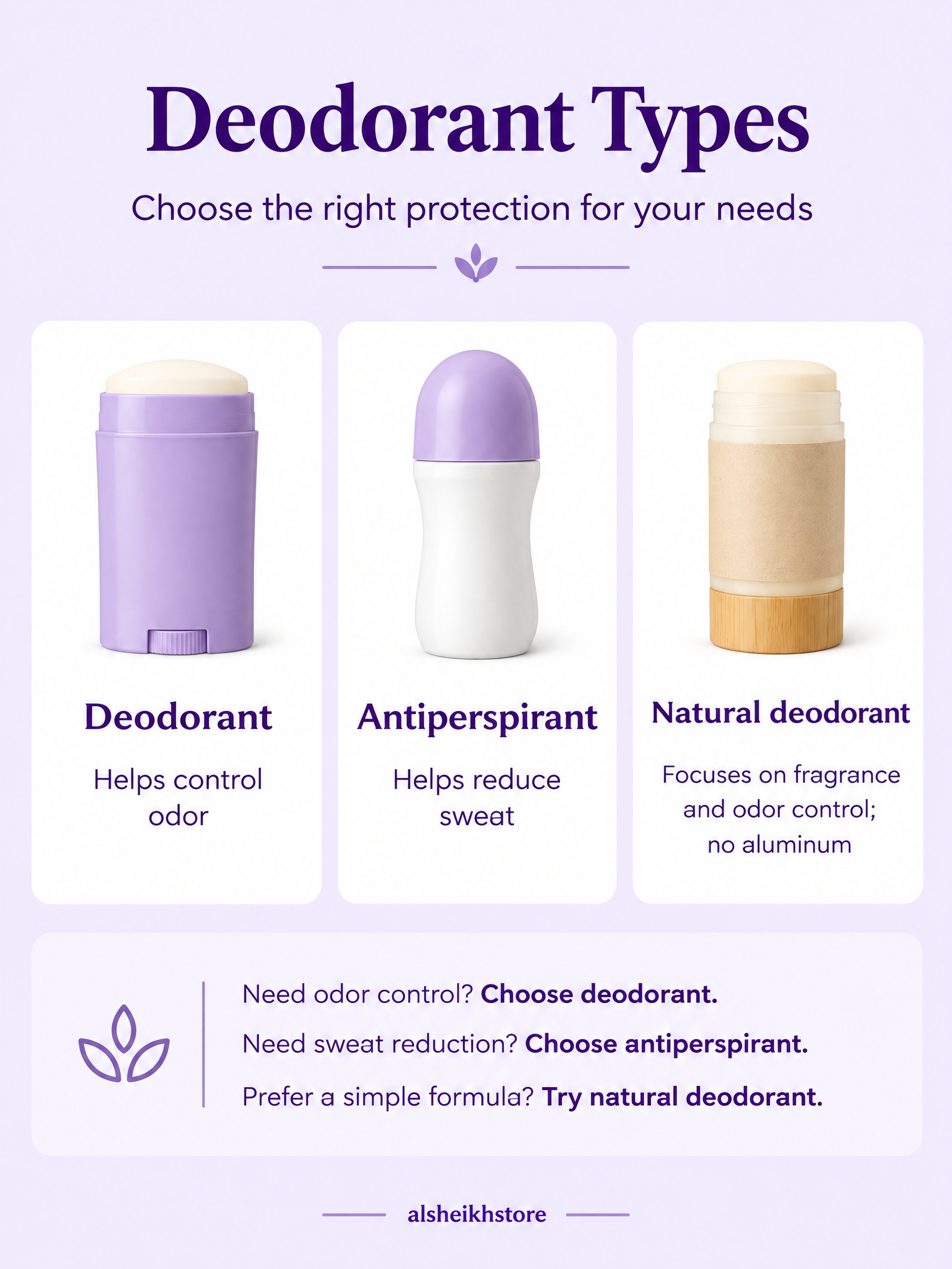
- Deodorant neutralises odour and adds fragrance but does nothing to reduce sweat itself. In hot climates or during high activity, that means more moisture for bacteria to work with, and the fragrance has to work harder to keep up.
- Antiperspirant reduces the amount of sweat reaching your skin in the first place. Less moisture means less fuel for odour-causing bacteria, so both your natural and applied scent stay cleaner for longer.
- Combination formulas antiperspirant plus a genuinely well-built fragrance are generally the strongest option if all-day scent is your main priority, since they attack the problem from both directions instead of only masking it.
If you sweat heavily, run hot, or spend long hours outdoors, prioritising a good antiperspirant over a “nice-smelling” deodorant-only product will usually solve the fading-scent problem more effectively than switching scents ever will. You can browse antiperspirant and deodorant options side by side on the Al Sheikh homepage to compare formats before you buy.
How to Actually Pick a Scent (Not Just a Format)
Once you’ve settled on antiperspirant vs. deodorant, scent choice comes down to a few honest questions rather than trends:
- What do you already wear? If you use a fragranced body wash, lotion, or perfume, an unrelated or clashing deodorant scent is often the actual cause of that “off” or overpowering combination people complain about — not the deodorant itself.
- What’s your activity level and climate? Lighter, citrus or “fresh” profiles tend to feel more appropriate in heat and high activity, while richer woodsy or musk-based scents can feel heavier in the same conditions.
- Do you want to smell noticeable, or just clean? There’s a real difference between a scent designed to be detected up close (subtle florals, powder, light musk) and one designed to project (heavier oud, sandalwood, or musk concentrates). Neither is wrong — but picking the wrong one for your setting is usually where “too strong” complaints come from.
- Sensitive skin changes the calculus. Lightly scented or fragrance-free formulas exist specifically because stronger fragrance blends are more likely to irritate reactive skin — if you’ve had redness or itching with scented sticks before, that’s the first thing to change, not the brand. For a deeper look at choosing scents for sensitive skin, see our related guide on the Al Sheikh blog.
What a Genuinely Good Formula Looks Like on the Label
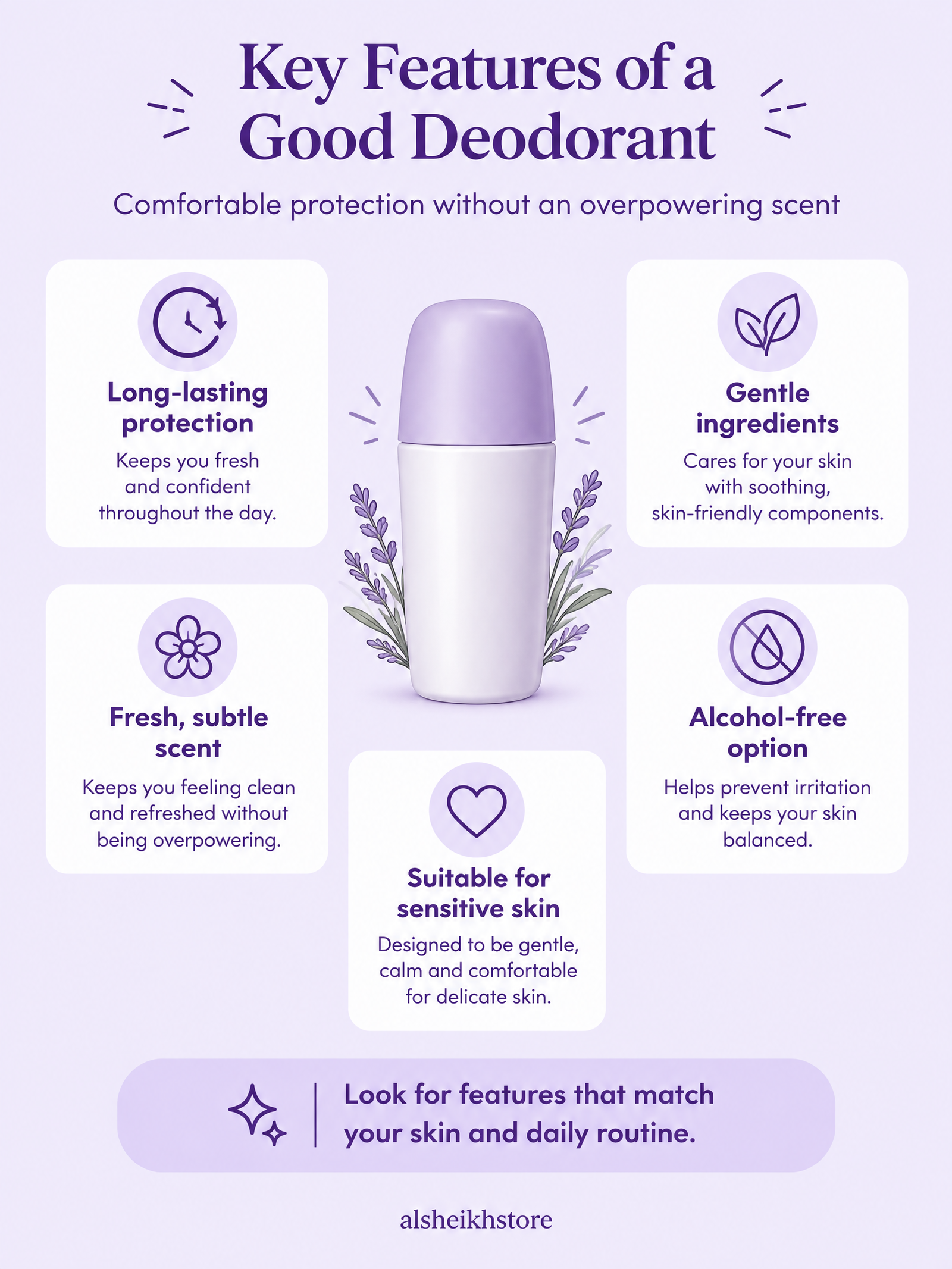
Skip the marketing copy and look for these specifics instead:
- A named fragrance structure (top, middle, base notes) rather than a single vague scent word — it’s a decent signal the fragrance was actually developed rather than added as an afterthought
- Clinically tested sweat or odour protection claims, not just “24-hour freshness” with no backing
- A short, recognisable ingredient list if you’re avoiding aluminium, synthetic fragrance, or specific irritants
- Format details — lotion and roll-on formats generally outperform sticks and sprays specifically on scent longevity, even when the fragrance itself is identical (see our full range of formats to compare)
Getting More Out of Any Deodorant You Choose
Application habits affect scent longevity as much as the product itself:
- Apply to clean, completely dry skin fragrance and antiperspirant actives both bond poorly to skin with leftover sweat, lotion, or yesterday’s product residue
- If you’re using an antiperspirant, applying at night lets it work while sweat glands are naturally less active, with a lighter reapplication in the morning
- Use a thin, even layer rather than a thick one over-application doesn’t extend how long a scent lasts, it just adds more fragrance sitting on the surface that fades at the same rate
- Store your deodorant away from heat and direct sun, since warmth breaks down fragrance compounds over time
- If you shave or exfoliate underarms, wait a few minutes before applying to avoid irritation that can throw off how the product performs on your skin
For more application and skincare tips like these, check the Al Sheikh blog.
Conclustion
The best-smelling deodorant isn’t the one with the most appealing name on the shelf it’s the one built around a real fragrance structure, matched to a format that actually holds that fragrance against your skin, and backed by genuine sweat control if you need it. Start by deciding whether you need an antiperspirant or a deodorant is enough, then pick a scent family that matches your climate, activity level, and what else you’re already wearing. Get those two decisions right, and the “why does this fade by lunch” problem mostly solves itself.
For more grooming and personal care guides like this one, check out the full library on the Al Sheikh blog, or head to the Al Sheikh homepage to browse the range.
Frequently Asked Questions
What actually makes a deodorant smell good all day, not just at first? A well-structured fragrance (with top, middle, and base notes), a format that absorbs into skin rather than sitting on top, and genuine sweat control — since bacteria feeding on sweat is what causes odour to break through fragrance over time.
Is antiperspirant or deodorant better for long-lasting scent? Antiperspirant generally wins for scent longevity, because it reduces the sweat that feeds odour-causing bacteria, leaving less for both your natural body odour and the applied fragrance to compete with.
Why does my deodorant smell great in store but different on my skin? Skin chemistry, body temperature, and any other fragranced products you’re already wearing (body wash, lotion, perfume) all interact with a deodorant’s scent, which is why a fragrance can smell noticeably different once it’s on you versus in the container.
Are lotion or roll-on deodorants really better than sticks and sprays for scent? Generally yes — lotion and roll-on formats tend to absorb into the skin rather than sit on the surface, which usually means a more even, longer-lasting scent release compared to sticks (uneven layering) or sprays (fast fragrance dissipation).
Should my deodorant scent match my perfume or cologne? It helps. A deodorant scent that clashes with your perfume, body wash, or lotion is a common (and overlooked) cause of a combination smelling “off” or overpowering — matching scent families, or choosing an unscented deodorant, usually solves it.
Is a stronger-smelling deodorant always more overpowering? Not necessarily — it depends on the fragrance’s intended throw. Some scents are designed to be noticed only up close, while others are designed to project further; picking one that matches your setting matters more than the raw strength of the scent itself.

Best Amazon Beauty & Grooming Product Reviews