
|
Getting your Trinity Audio player ready... |
Table of Contents
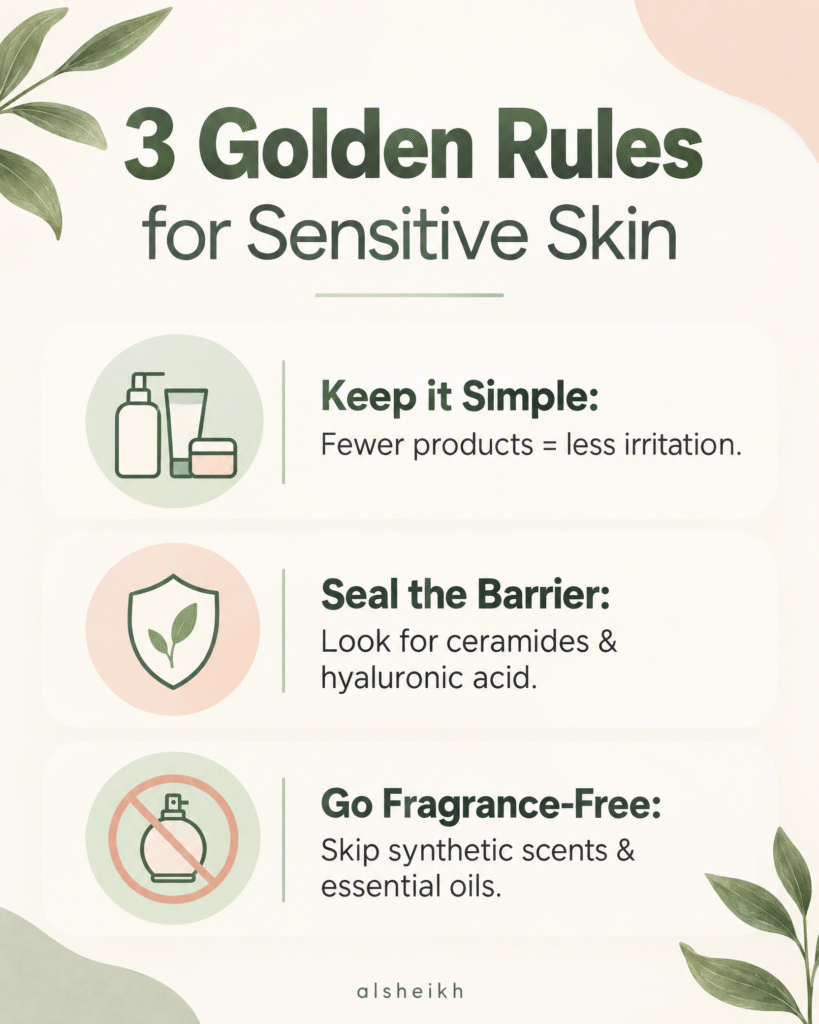
Sensitive skin is not a diagnosis it is a description of how your skin responds to its environment and to the products you apply to it. The dermatologist-backed approach to managing it is the same in every clinical guideline: strip your routine down, repair your barrier, eliminate irritants one at a time, and only add actives when your skin is stable. The warning signs that require a dermatologist rather than a gentler cleanser are specific persistent redness that does not fade, scaly or crusting patches, hives, or any change in the skin that looks like it is getting worse despite your best efforts. This guide covers everything: the 5 signs, the full routine, the ingredients to use and avoid, how to get clear and glowing skin naturally, and exactly when to book an appointment.
| Sensitive skin care = fewer products, gentler formulas, fragrance-free everything, and a consistent routine that you do not change frequently. The most common mistake is using too many products and blaming sensitivity when the problem is product overload. Strip back first, then build. |
| 60-70%People who self-identify as having sensitive skin (IFCS data) | 3Core steps that every sensitive skin routine needs: cleanse, moisturise, SPF | 28 daysMinimum time to assess whether a product change is working | 1 at a timeMaximum new products to introduce — never layer multiple new items |
What Is Sensitive Skin? And Is It a Real Condition?

Sensitive skin is a condition characterised by a lower threshold for skin reactions to stimuli that would not bother most people. The International Forum for the Study of Itch (IFSI) defines sensitive skin as a syndrome of unpleasant sensations stinging, burning, pain, pruritus in response to stimuli that would not cause such sensations in normal skin. Between 60 and 70 percent of people worldwide self-report sensitive skin, though clinical diagnosis rates are lower because many people manage it without seeking medical help.
What makes sensitive skin clinically interesting is that it is not always caused by a known underlying condition. Some people with sensitive skin have identifiable diagnoses eczema, rosacea, contact dermatitis, or psoriasis. Others have genuinely reactive skin with no identifiable pathology. In both cases, the management approach is similar: reduce the burden on the skin, repair the barrier, and identify and avoid individual triggers.
The most important distinction is between truly sensitive skin and skin that is currently sensitised. Skin that has become reactive due to over-exfoliation, too many active ingredients, or barrier disruption can behave exactly like sensitive skin but recover fully once the damage is reversed. Before assuming permanent sensitivity, ask whether your routine has been gentle and stable for at least 28 days.
The 5 Signs of Skin Sensitivity
Dermatologists look for these five signs when assessing whether a patient has sensitive skin:
| Sign | What It Looks Like | Common Trigger | What It Means |
| 1. Redness | Flushing or patches across cheeks, nose, or chin | Fragrance, temperature change, spicy food | Capillary reactivity may indicate rosacea if persistent |
| 2. Stinging or Burning | Immediate discomfort on applying a product — even water sometimes | Alcohol, acids, fragrance, preservatives | Compromised skin barrier nerve endings exposed |
| 3. Tightness and Dryness | Skin feels pulled, rough, or flaky — especially after washing | Hot water, cold weather, harsh cleansers, low humidity | Transepidermal water loss barrier is not retaining moisture |
| 4. Itching and Bumps | Persistent urge to scratch, small raised bumps or hives | Allergens, detergent residue, synthetic fabrics, certain foods | Allergic or irritant contact reaction patch testing recommended |
| 5. Breakouts After Products | Pustules, closed comedones, or rashes appearing after using a product | Comedogenic ingredients, silicones, heavy oils, fungal acne triggers | Product incompatibility not always true sensitivity |
| The most reliable self-test for sensitive skin: apply a gentle fragrance-free moisturiser to your inner wrist and wait 24 hours. No reaction means sensitivity is unlikely to be a major barrier issue. Redness, itching, or stinging within 24 hours suggests reactivity that warrants a full product audit. |
What Causes Sensitive Skin? Common Triggers to Know
External Triggers
- Fragrance the single most common cause of contact allergic and irritant reactions in skincare. Present in most conventional cleansers, moisturisers, and cosmetics including those marketed as natural.
- Preservatives methylisothiazolinone (MIT), parabens, and formaldehyde-releasing preservatives are among the most common allergens identified in patch testing.
- Harsh surfactants sodium lauryl sulfate (SLS) in cleansers and shampoos strips the skin barrier, increasing sensitivity to subsequent products.
- Physical factors hot water, cold wind, low humidity, and direct sun exposure all trigger reactivity in sensitive skin types.
- Fabric and laundry products synthetic fabrics and fragranced detergents cause underdiagnosed contact irritation, particularly on the neck and chest.
Internal Triggers
- Stress cortisol release from chronic stress impairs barrier function and increases inflammatory skin reactivity.
- Hormonal changes menstrual cycle, pregnancy, and perimenopause alter skin barrier function and sensitivity levels.
- Diet some individuals react to dairy, gluten, high-sugar foods, or specific allergens. Keep a food and skin diary to identify patterns.
- Medications certain oral medications, particularly ACE inhibitors and some antibiotics, cause photosensitivity or skin reactions.
- Underlying skin conditions eczema, rosacea, psoriasis, and contact dermatitis all present with sensitive skin symptoms. If symptoms are persistent, a dermatologist can rule these in or out.
How to Build a Sensitive Skin Routine Morning
The morning routine for sensitive skin has one non-negotiable: mineral sunscreen at the end. Without SPF, UV exposure degrades the barrier and increases reactivity over time. Every other step is secondary to this.
| Step | Product Type | What to Look For | What to Avoid |
| 1 | Gentle cleanser | Fragrance-free, sulfate-free, pH 4.5 to 6.5, micellar or cream formula | SLS, SLES, fragrance, alcohol, physical exfoliants |
| 2 | Hydrating toner (optional) | Hyaluronic acid, glycerin, aloe vera skip if your skin is very reactive | Alcohol-based toners, witch hazel, AHAs in morning |
| 3 | Serum (if using) | Niacinamide (barrier repair), Vitamin C (brightening) introduce one at a time | High-concentration acids, retinol in morning routine |
| 4 | Moisturiser | Ceramides, hyaluronic acid, glycerin, squalane, shea butter | Fragranced formulas, essential oils, comedogenic heavy oils |
| 5 | Sunscreen — non-negotiable | Mineral SPF 30+ (zinc oxide or titanium dioxide) sits on skin rather than absorbing | Chemical sunscreen actives (oxybenzone, avobenzone) if reactive |
| Application Order Matters: Apply products thinnest to thickest. Serum before moisturiser, moisturiser before sunscreen. Allow 30 to 60 seconds between layers for absorption. Do not rub press products gently into the skin. |
How to Build a Sensitive Skin Routine — Night
The night routine is where repair happens. Skin cell turnover peaks between 11pm and 4am. A good night routine supports this process without disrupting it with actives that your barrier cannot tolerate yet.
| Step | Product Type | What to Look For | Frequency |
| 1 | Oil cleanser or micellar water | To remove SPF and makeup before your main cleanse skip if no makeup worn | Daily if wearing SPF or makeup |
| 2 | Gentle cleanser | Same gentle fragrance-free formula as morning | Every night |
| 3 | Active treatment (when using) | Low-percentage retinol (0.025 to 0.1%) introduce 1 night per week, build slowly | 1 to 3 nights per week maximum for beginners |
| 4 | Barrier repair moisturiser | Ceramides, peptides, niacinamide, centella asiatica (cica) heavier than daytime | Every night |
| 5 (optional) | Facial oil or sleeping mask | Squalane, rosehip oil, or centella-based sleeping pack for extra dry or compromised skin | 2 to 3 nights per week or when skin feels very dry |
If you want to introduce retinol to a sensitive skin routine, start with 0.025% once per week — not twice per week, not every other night. Give your skin 4 to 6 weeks at that frequency before considering an increase. The retinol purge phase (dryness, flaking, mild irritation in weeks 1 to 4) is a normal adaptation response, not a sign the product is wrong for you.
For a full explanation of how skin adapts to active ingredients and why some products seem to stop working, read: Does Your Skin Get Used to Skincare Products?
Ingredients to Use and Avoid With Sensitive Skin
| Category | Use These | Avoid These |
| Cleansing | Glycerin, cocamidopropyl betaine (gentle surfactant), micellar technology | Sodium lauryl sulfate (SLS), denatured alcohol, fragrances, menthol |
| Hydration | Hyaluronic acid, glycerin, aloe vera, beta-glucan, allantoin | Alcohol-based formulas, high-concentration AHAs as humectants |
| Barrier Repair | Ceramides (1, 3, 6-II), cholesterol, fatty acids, squalane, niacinamide | Petrolatum if acne-prone, heavy mineral oils, silicone-only formulas |
| Soothing / Anti-inflammatory | Centella asiatica (cica), green tea extract, oat extract, colloidal oatmeal, panthenol (B5) | Essential oils (lavender, eucalyptus, peppermint), citrus extracts, witch hazel |
| Actives (introduce carefully) | Niacinamide (3 to 5%), low-dose retinol (0.025%), azelaic acid (mild), bakuchiol | High-concentration AHAs at first, benzoyl peroxide at high doses, physical scrubs |
| Sun Protection | Zinc oxide, titanium dioxide (mineral sunscreens) non-irritating, sit on skin surface | Oxybenzone, octinoxate, avobenzone (chemical sunscreens) can sting reactive skin |
What Serums Cannot Be Used Together
Two serum combinations that dermatologists consistently advise against for sensitive skin:
- Retinol and AHAs (glycolic or lactic acid) at the same time both increase cell turnover and the combination causes significant irritation and barrier disruption. If using both, use them on separate nights.
- Vitamin C (L-ascorbic acid) and AHAs at the same time the low pH needed for Vitamin C stability conflicts with AHA activity, and the combination often causes stinging and redness. Use Vitamin C in the morning and AHAs at night.
- Retinol and Vitamin C at the same time Vitamin C is unstable and may degrade retinol. Use Vitamin C in the morning and retinol at night.
- Niacinamide and high-concentration Vitamin C together at very high concentrations the combination can cause flushing. At lower concentrations (below 20% Vitamin C) this is less of a concern, but sensitive skin should avoid the combination regardless.
How to Get Clear, Glowing Skin Naturally at Home (Sensitive Skin Safe)
All of these methods are safe for sensitive skin and based on dermatologist-endorsed approaches:
| Goal | Safe Method for Sensitive Skin | What to Expect and When |
| Clear skin naturally at home | Consistent gentle cleansing morning and night, daily SPF, weekly hydrating mask with oat or aloe base | Reduction in congestion and texture within 3 to 4 weeks |
| Glowing skin without irritation | Niacinamide serum 3 to 5% daily, hyaluronic acid on damp skin, mineral SPF (blocks dullness from UV) | Visible glow improvement in 4 to 6 weeks with consistent use |
| Treat dry skin on face overnight | Apply a ceramide-rich moisturiser to slightly damp skin, then seal with a thin layer of squalane or occlusive | Noticeably softer skin by morning after first use |
| Treat dry skin home remedies (face) | Pure aloe vera gel (refrigerated), colloidal oatmeal mask, plain honey mask for 10 minutes weekly | Temporary soothing relief — consistent moisturising is still required |
| 7-day glowing skin challenge | Day 1 to 3: Strip routine to basics only. Day 4 to 5: Add niacinamide. Day 6 to 7: Add SPF daily and hydrating mist midday. | Skin calmer by day 3, early glow visible by day 6 to 7 |
Healthy Skin Tips for Face — 10 Ways to Care for Your Skin
- Cleanse with lukewarm water hot water strips oils and increases sensitivity. Cold water does not effectively remove product residue. Lukewarm is correct.
- Pat dry, never rub a rough towel rubbed across sensitive skin is an irritant event. Press a clean, soft cloth to the skin and let it absorb moisture.
- Moisturise within 3 minutes of washing the skin is most receptive to moisture immediately after cleansing. Waiting longer allows transepidermal water loss to begin.
- Change pillowcases twice a week fabric fibres, skincare residue, and oil build up on pillowcases and transfer to facial skin during sleep.
- Keep your hands away from your face touching the face spreads bacteria, disrupts product layers, and physically irritates reactive skin.
- Do not introduce more than one new product at a time always wait 28 days before adding something else. This is how you identify what helps and what harms.
- Patch test every new product apply to the inner elbow or behind the ear for 24 hours before applying to the face.
- Drink adequate water and eat a varied diet hydration supports skin function from the inside. Vitamin C-rich foods support collagen production. Omega-3 fatty acids support barrier function.
- Use a humidifier in dry or air-conditioned environments low ambient humidity increases transepidermal water loss from all skin types, but sensitive skin is affected most.
- Manage stress actively — cortisol from chronic stress is one of the most underrecognised triggers of sensitive skin flares. Sleep, exercise, and stress management are skincare.
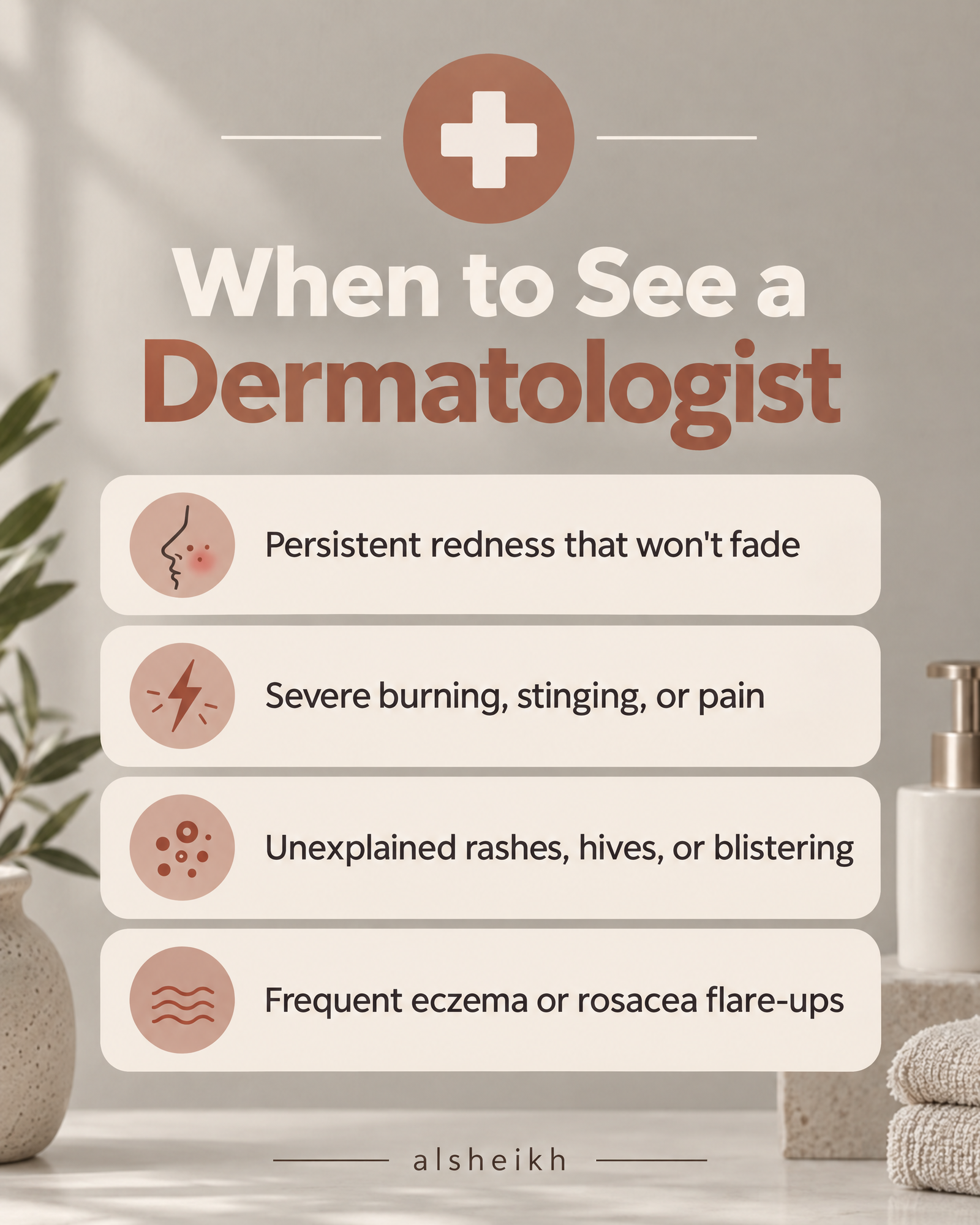
Red Flags: When You Should Go to the Doctor
These warning signs go beyond cosmetic sensitivity and require a dermatologist assessment:
| Warning Sign | Why It Is a Red Flag | What the Dermatologist Will Check |
| Persistent redness that does not fade | Chronic flushing unresponsive to gentle products suggests rosacea, not cosmetic sensitivity | Vascular reactivity, papulopustular rosacea, photodamage pattern |
| Scaly, crusting, or oozing patches | These are not typical sensitivity symptoms they indicate possible eczema, psoriasis, or fungal infection | Atopic dermatitis, seborrheic dermatitis, psoriasis, skin infection |
| Hives or sudden widespread swelling | Could indicate allergic contact dermatitis or systemic allergic reaction requiring medical management | Allergen patch testing, IgE levels, contact allergen identification |
| Symptoms that worsen despite gentle products | If the skin is still reacting after removing all potential irritants, an underlying condition is likely present | Rosacea, lupus, contact dermatitis, perioral dermatitis |
| Burning or stinging from plain water or nothing at all | Neurogenic sensitivity nerve-related reactivity rather than product-caused. Needs specialist assessment. | Sensitive skin syndrome, neurogenic inflammation, mast cell activity |
| Skin colour changes or new growths | New pigmentation, moles that change size or colour, or lesions that bleed are urgent dermatology referrals | Melanoma screening, basal cell carcinoma, actinic keratosis |
| Symptoms affecting daily function | If your skin condition causes lost sleep, anxiety, or inability to work normally, this warrants professional care | Quality of life assessment, systemic options, phototherapy |
What the Dermatologist Will Do at Your Appointment
- Take a full medical history including current medications, allergies, family history of skin conditions, and your current product list
- Assess the distribution and pattern of your skin symptoms — rosacea, eczema, and psoriasis each have characteristic patterns that guide diagnosis
- Potentially refer for patch testing — a 48 to 72 hour exposure test to identify specific contact allergens causing your reactions
- Prescribe targeted treatments if a specific condition is diagnosed — topical steroids for eczema, azelaic acid or metronidazole for rosacea, calcineurin inhibitors for periorbital sensitivity
- Recommend a simplified product list based on your specific triggers — this is more valuable than any generic sensitive skin product
What Not to Do Before a Dermatology Appointment
- Do not wear makeup to the appointment — the dermatologist needs to see your skin as it is, not as it appears under product layers
- Do not apply new products in the week before your appointment — you want your skin in its baseline state, not reacting to something new
- Do not stop your normal routine entirely — the dermatologist needs to know what your skin is doing on your existing products
- Do not tan or have cosmetic procedures in the two weeks before your appointment — both alter how the skin presents
- Bring your full product list — or better, bring the products themselves. Knowing exactly what you are using is essential for identifying triggers.
The Number 1 Dermatologist Recommended Brand for Sensitive Skin
There is no single universally agreed number one brand — dermatologists vary in their recommendations based on individual patient profiles. However, the brands most consistently cited across dermatology guidelines and clinical studies for sensitive skin are:
- CeraVe — ceramide-based, fragrance-free, developed with dermatologists. The Hydrating Cleanser and Moisturising Cream are benchmark recommendations for sensitive and eczema-prone skin.
- La Roche-Posay — thermal spring water formulations with proven tolerability. The Toleriane range is specifically tested on sensitive and reactive skin. Widely recommended by dermatologists in Australia and globally.
- Avene — French pharmacy brand built around Avene thermal spring water, clinically tested for reactive skin. Particularly well-regarded for rosacea and atopic dermatitis.
- Neutrogena Sensitive Skin line — accessible, affordable, widely tested for tolerability. The Hydro Boost Sensitive formula uses glycerin and hyaluronic acid without common irritants.
The most important characteristic of any brand for sensitive skin is not the marketing claim — it is the actual ingredient list. Fragrance-free and alcohol-free are the two non-negotiables. Everything else is secondary.
What People Search About Sensitive Skin Care
Real search queries this guide answers:
- How to care for sensitive skin — dermatologist tips
- What are the 5 signs of skin sensitivity
- How to make your skin glow naturally at home
- 10 ways of caring for the skin
- How to treat dry skin on face home remedies
- How to cure dry skin on face overnight
- 7 days glowing skin challenge
- How to get clear skin naturally at home
- What is the best skincare for sensitive skin according to dermatologists
- What is a red flag in dermatology
- What not to do before a dermatologist appointment
- Which two serums cannot be used together
- What is the number 1 dermatologist recommended brand for sensitive skin
- What to avoid if you have sensitive skin
Frequently Asked Questions
What are the 5 signs of sensitive skin?
The five main signs are: persistent redness or flushing, stinging or burning on product application, skin tightness and dryness particularly after washing, itching or small bumps in response to products or fabrics, and breakouts or reactions after using products that should be tolerable. Not all five need to be present — two or three consistently occurring signs is enough to indicate sensitivity.
What is the best skincare routine for sensitive skin according to dermatologists?
A gentle, fragrance-free cleanser morning and night. A ceramide and hyaluronic acid moisturiser applied to slightly damp skin twice daily. Mineral SPF 30+ (zinc oxide or titanium dioxide) every morning. One active ingredient maximum at a time — introduce slowly, one product per 28-day period. Patch test everything. The simplest routine that keeps skin calm and hydrated is always the best routine for sensitive skin.
How do I get glowing skin naturally at home if I have sensitive skin?
Niacinamide 3 to 5% used consistently for 4 to 6 weeks is the safest brightening ingredient for sensitive skin — it reduces redness, evens tone, and improves glow without the irritation risk of Vitamin C or AHAs. Keep skin hydrated with hyaluronic acid on damp skin before moisturising. Use mineral SPF daily — UV exposure is the primary cause of dullness over time. A colloidal oatmeal or aloe mask once or twice a week provides immediate brightness.
How do I treat dry skin on my face overnight?
Apply a ceramide-rich moisturiser to damp skin, then apply a thin layer of squalane oil or an occlusive over the top — this is called skin slugging. The occlusive layer prevents transepidermal water loss overnight and locks the moisturiser into the skin. Use only fragrance-free, gentle formulas. Squalane is the best oil for sensitive skin because it is non-comedogenic, fragrance-free, and closely matches the skin’s own lipids.
What are the red flags that mean I should see a dermatologist?
See a dermatologist if your skin symptoms have not improved after 4 to 6 weeks of a simplified gentle routine. Also seek medical advice for: persistent redness that does not fade with gentle products, scaly, crusting, or oozing patches, hives or swelling after product use, any new or changing skin growth or pigmentation, or symptoms that significantly affect your daily life or sleep. These are signs of a treatable medical condition rather than cosmetic sensitivity.
Which two serums should not be used together?
The three combinations to avoid for sensitive skin specifically: retinol and AHAs (use on separate nights), Vitamin C and retinol together (use Vitamin C morning, retinol night), and Vitamin C and AHAs together (acidic combination increases irritation). The practical approach for sensitive skin is to use only one active serum at a time — introduce a second only when the skin has tolerated the first consistently for 4 to 6 weeks.
More Skincare Guides at alsheikh.com.au
| Article | URL |
| Does Your Skin Get Used to Skincare Products? Dermatologist Explains | https://alsheikh.com.au/does-skin-get-used-to-skincare-products/ |
| Charlotte Tilbury Magic Cream 30ml Review — 2026 Formula | https://alsheikh.com.au/ct-magic-cream-30ml-review/ |
| The Best Charlotte Tilbury Magic Cream Dupe From $7 | https://alsheikh.com.au/charlotte-tilbury-magic-cream-dupe/ |
| Farmacy Honey Halo Hydrating Moisturizer Review | https://alsheikh.com.au/farmacy-honey-halo-hydrating-moisturizer/ |
| Is Hyaluronic Acid the Best Serum for Glowing Skin in Winter? | https://alsheikh.com.au/best-serum-for-glowing-skin-in-winter/ |
| Deeply Hydrating Moisturizer Review | https://alsheikh.com.au/deeply-hydrating-moisturizer/ |

Best Amazon Beauty & Grooming Product Reviews