
|
Getting your Trinity Audio player ready... |
Table of Contents
No — your skin does not get used to skincare products in the way most people think. Dermatologists are consistent on this: skin does not become immune to active ingredients or get bored of their benefits. A well-formulated product that suits your skin will keep doing its job over the long term. What feels like a product stopping to work is almost always one of three things: your skin has improved so much the results are invisible now, your skin needs change with the season, or you became inconsistent without realising it. There is one exception worth knowing about, and it involves retinoids, but it is not what most people assume.
| Dermatologist Verdict: Dr Lidia Maroñas, founder of Oneskinmed: ‘Skin doesn’t become immune to active ingredients or get bored of their benefits. A well-formulated cream that suits your needs will keep doing its job over the long haul. The confusion comes from tachyphylaxis, a real phenomenon, with prescription medications being incorrectly applied to cosmetic skincare.’ |
| NoSkin does not build immunity to cosmetic skincare | 28 daysMinimum time for most active ingredients to show results | 6-12 moPeak retinoid results most people give up at week 4 | 1 caseReal tolerance: prescription topical steroids only |
Where This Myth Comes From — Tachyphylaxis Explained
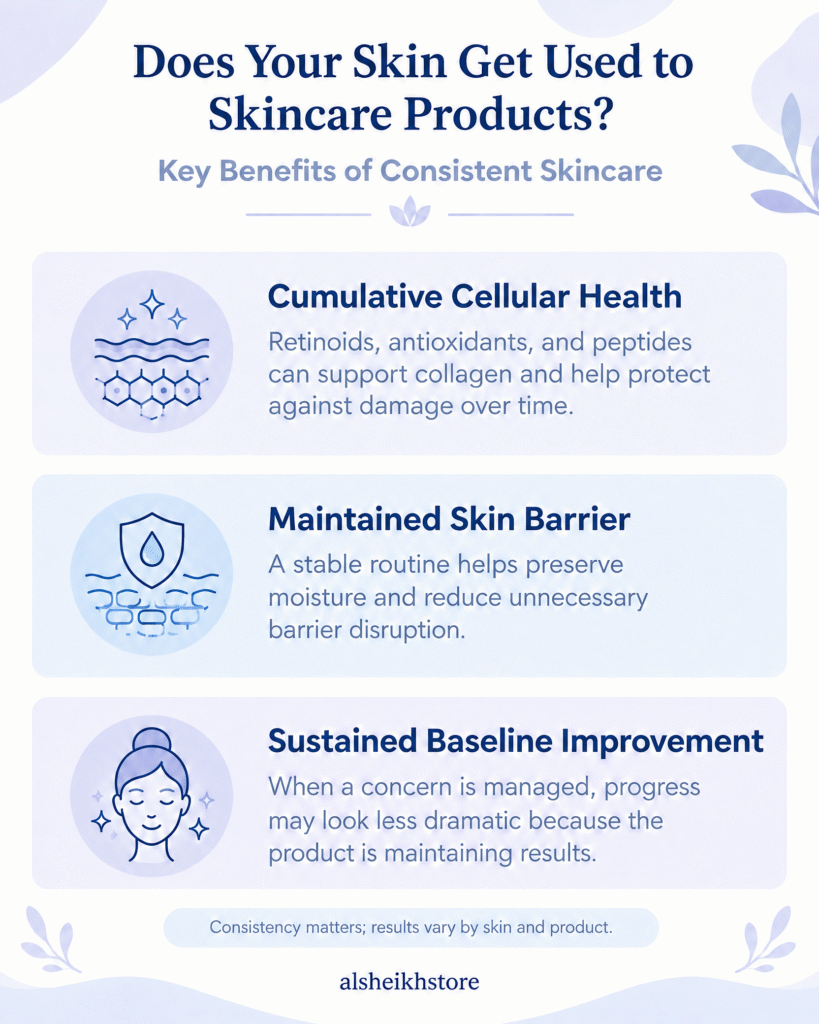
The idea that skin builds a tolerance to skincare products borrows logic from two real phenomena, antibiotic resistance and tachyphylaxis, and applies them to a context where neither actually operates.
Tachyphylaxis is a medical term for when a drug loses its effect after repeated administration because the body has genuinely adapted to it. This does happen with certain medications, including prescription-strength topical steroids, which is why dermatologists prescribe them in short, defined cycles rather than as continuous long-term treatments.
Cosmetic skincare products do not work the same way. A Hyaluronic Acid moisturiser attracts water through straightforward biochemistry. Vitamin C inhibits melanin production through a specific enzyme pathway. Retinol increases cell turnover by binding to nuclear receptors. None of these mechanisms involve the body developing a counter-response the way it does with drugs like antibiotics or topical steroids. As Dr. Sandra Lee (Dr. Pimple Popper) puts it: ‘Your skin doesn’t become immune to a skincare ingredient like it might with certain medications or antibiotics.’
| The body-building ‘muscle confusion’ concept changing exercises regularly to prevent adaptation is sometimes applied to skincare. This makes no physiological sense. Your skin is not a muscle adapting to a workout. It is an organ following biochemical rules that do not change based on familiarity. |
Ingredient by Ingredient — Myth vs Reality
Here is what dermatologists actually say about each major skincare category:
| Ingredient Type | The Myth | The Dermatologist Reality |
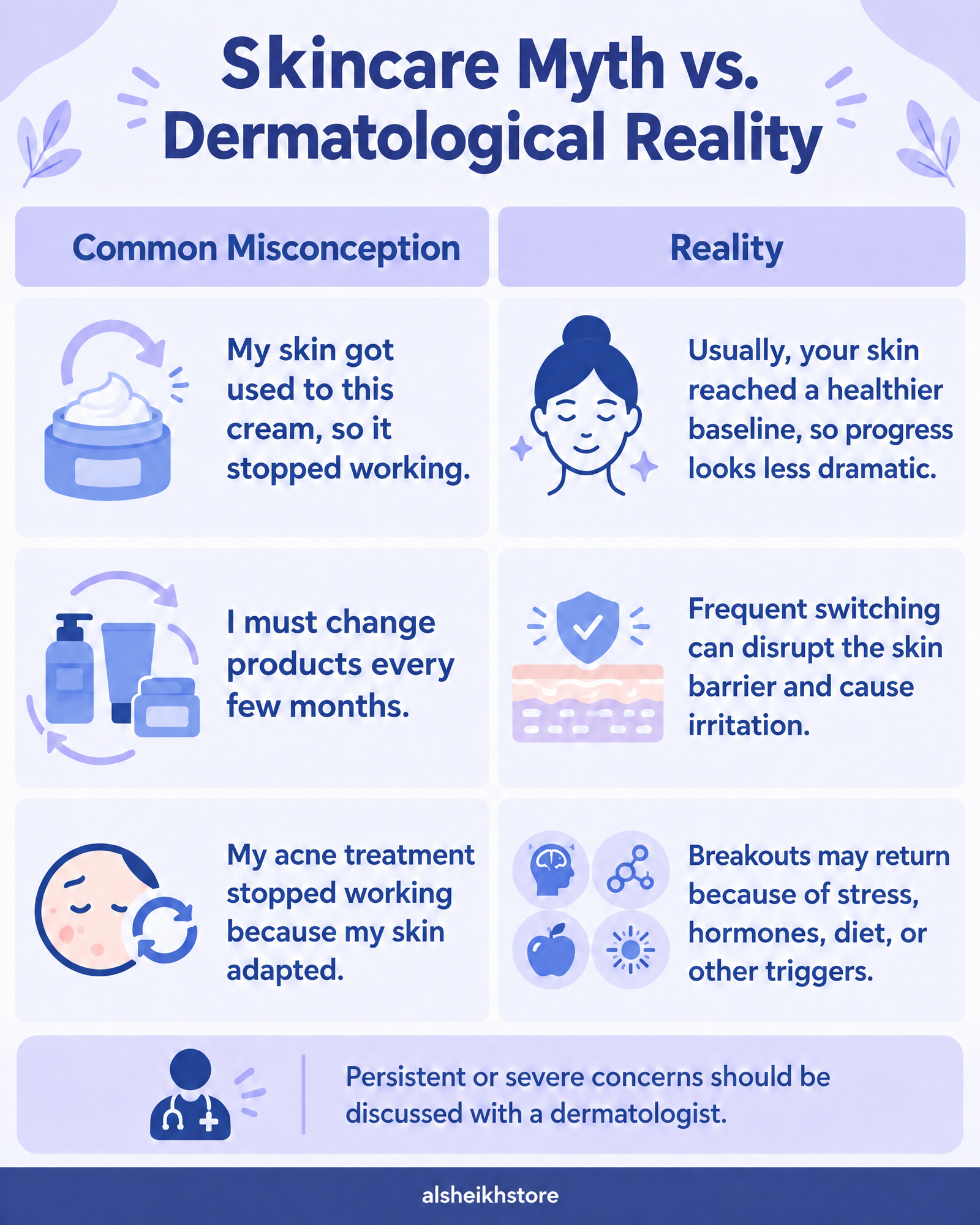
| Moisturisers (HA, Ceramides) | Skin ‘gets used to’ the hydration and stops responding | Completely false. Moisturisers work through basic physics and chemistry occlusives seal moisture, humectants attract water. These mechanisms do not adapt or become less effective. |
| Retinoids / Retinol | Skin builds a tolerance and you need stronger doses to see results | Skin adapts to reduce initial irritation but not the efficacy. The same strength retinol used for 10 years does more than a strong one abandoned after 3 months. |
| Vitamin C Serums | Stops brightening after a while need to switch brands | Results plateau because the ‘before’ damage is already corrected. The ingredient is still working it is now maintaining, not transforming. |
| Niacinamide | Skin becomes resistant, and pores look the same after a while | Niacinamide does not produce diminishing results. If it stopped working, the more likely cause is inconsistent use or a changed skin concern. |
| Exfoliating Acids (AHA/BHA) | Skin adapts need to increase frequency or concentration | No immunity or adaptation occurs. Reduced visible exfoliation just means cell turnover has improved. The acid is still doing its job. |
| SPF / Sunscreen | Your skin builds up sun tolerance and sunscreen is less necessary | No biological mechanism exists for this. UV damage accumulates regardless of previous exposure. SPF protection does not diminish with regular use. |
The One Real Exception — Retinoids
Retinoids, including retinol, retinaldehyde, and prescription tretinoin, are the one category where skin adaptation is real, but it is frequently misunderstood.
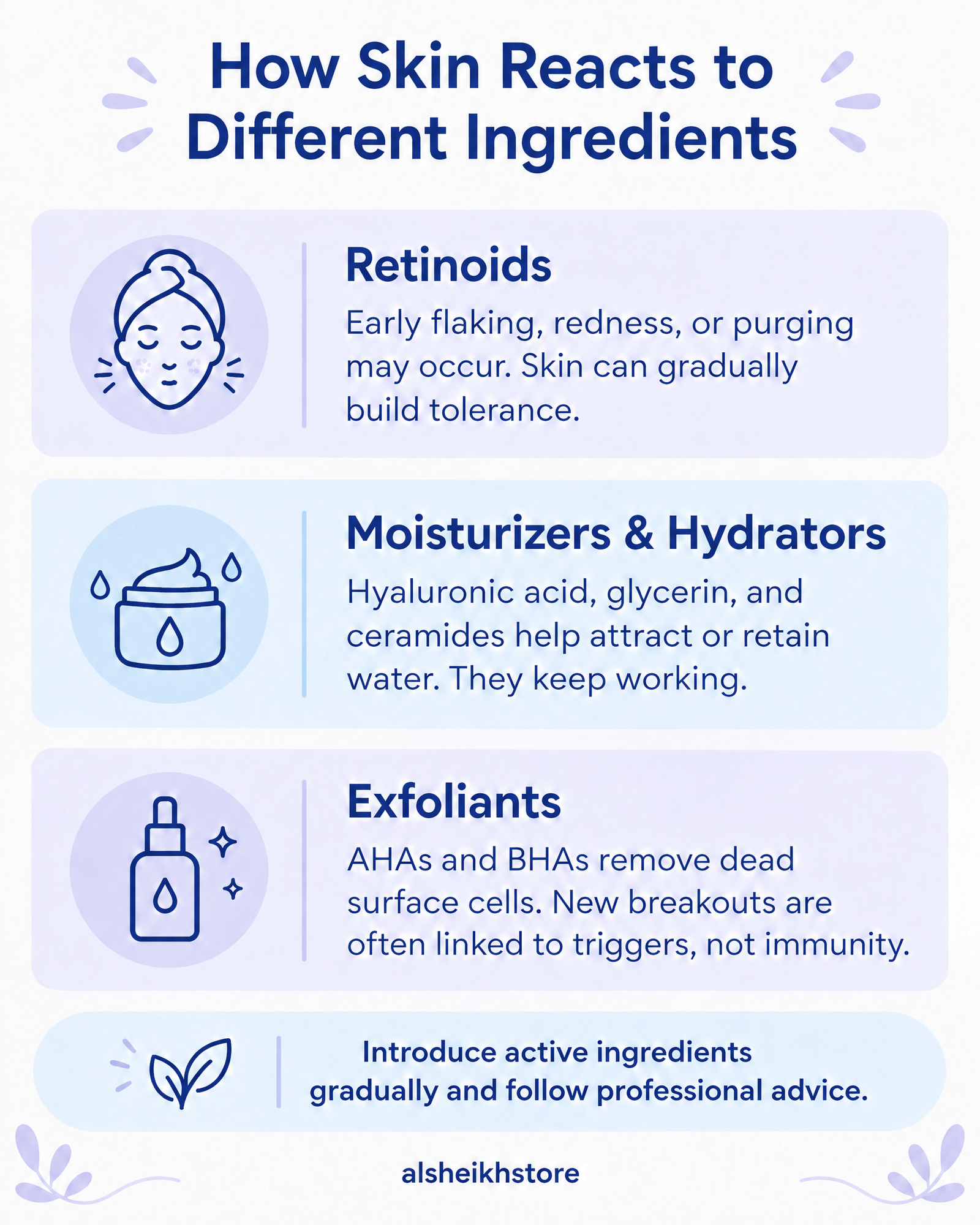
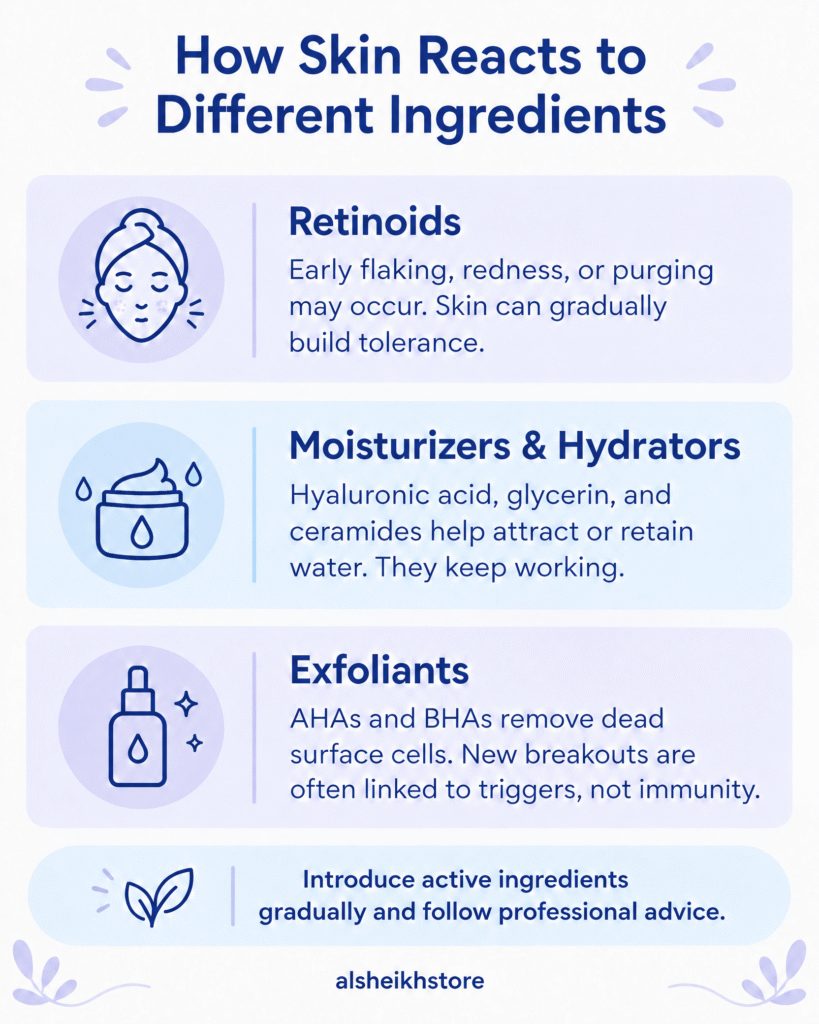
When you first start using retinol, it is normal to experience a period of dryness, flaking, redness, and what is called ‘purging’ a temporary worsening of the skin as the increased cell turnover pushes congestion to the surface. This phase typically lasts two to four weeks at 0.1% retinol and longer at higher concentrations.
As your skin continues using retinol over weeks and months, this irritation fades. People often interpret this as tolerance the retinol ‘working less.’ The opposite is true. The irritation fades because your skin has successfully adapted to the retinol stimulus and is now tolerating it well enough to use it consistently without disruption. The efficacy does not reduce. The irritation does. These are not the same thing.
Dr. Sandra Lee puts it clearly: ‘When you first start using retinol, it’s normal to go through a period of dryness or purging. That doesn’t mean the product isn’t working it means it’s starting to work.’ Peak results from retinoids come between 6 and 12 months of consistent use. Most people who decide retinol stopped working give up before month three.
| A low-strength retinoid used consistently for ten years does more for your skin than a high-strength one abandoned after three months because it felt too harsh. The goal is not the strongest formula it is the formula you can sustain long enough to see real results. |
Why Your Products May Actually Seem Less Effective Over Time
If your skin genuinely feels like a product stopped working, there are real explanations none of which involve tolerance:
| What You Think Is Happening | What Is Actually Happening | What to Do About It |
| Product stopped working | You adapted to the results the ‘before’ is gone. Vitamin C’s before-and-after glow disappears once existing hyperpigmentation is corrected. | Take before-and-after photos every 8 weeks. The improvement is real you just normalised it. |
| Moisturiser not hydrating anymore | Seasonal skin changes humidity drops in winter, skin naturally produces less oil in summer. The product did not change; your skin’s needs did. | Adjust your routine seasonally richer occlusive in winter, lighter formula in summer. |
| Retinol not making a difference | Inconsistency in use. Most people who claim retinol ‘stopped working’ are using it less often than they think. Skipping one to two nights per week halves the effective dose. | Track your usage. Consistent nightly use for 6 to 12 months is required for maximum retinoid results. |
| Breakouts returning despite same routine | Hormonal changes, dietary shifts, stress, medication changes internal factors that no topical product controls. | See a dermatologist to identify the underlying trigger rather than changing your entire product lineup. |
| Skin looks dull despite serum use | Product may have oxidised or expired. Vitamin C particularly is unstable; if it has turned orange or brown, it has degraded and is no longer active. | Check product age and storage. Vitamin C serums should be used within 3 to 6 months of opening and stored away from light and heat. |
| Acne getting worse with the same cleanser | Skin microbiome shift, over-cleansing leading to barrier damage, or a new trigger unrelated to the product. | Strip back the routine to basics: cleanser, moisturiser, SPF and reintroduce actives one at a time to identify the issue. |
What Skin Does and Does Not Adapt To
| Ingredient | Type of Adaptation | What This Means for Your Routine |
| Retinoids (Retinol, Tretinoin) | Reduced initial irritation | The ‘retinol purge ‘- dryness, flaking, sensitivity in weeks 1 to 4 fades as skin builds tolerance to the irritation, not to the efficacy. Peak results come at 6 to 12 months. |
| Benzoyl Peroxide | Reduced redness and irritation | Initial redness on application normalises over 2 to 4 weeks. The antibacterial action against acne-causing bacteria does not diminish with consistent use. |
| Salicylic Acid | Reduced tingling sensation | Early tingling on application lessens over weeks this is normal adaptation to mild chemical exfoliation, not a sign the product is less effective. |
| Topical Steroids (prescription) | Tachyphylaxis genuine tolerance build-up | This is the one real case of skin tolerance prescription strength topical steroids can cause them to lose effectiveness over time. This is why dermatologists prescribe in cycles. This does NOT apply to cosmetic products. |
How Long Skincare Ingredients Actually Take to Work
One of the most common reasons people think their skincare stopped working is that they did not wait long enough in the first place. Here is an honest timeline for each major active:
| Ingredient | Time to See Results | What You Should Notice By Then |
| Hyaluronic Acid | Immediate | Plumpness and smoothness from first use works immediately by drawing moisture to the skin |
| Ceramides | 2 to 4 weeks | Reduced dryness, less sensitivity, stronger skin barrier against environmental triggers |
| Niacinamide | 4 to 8 weeks | More even skin tone, reduced redness, smaller appearance of pores, regulated oil production |
| Vitamin C | 4 to 12 weeks | Gradual brightening, reduced appearance of dark spots, more luminous overall complexion |
| Retinol (0.1 to 0.3%) | 8 to 16 weeks | Smoother texture, reduced fine lines, more even pigmentation. Initial purging (weeks 1 to 4) is normal. |
| Retinoids (prescription Tretinoin) | 6 to 12 months | Peak anti-aging results significant improvement in fine lines, texture, and pigmentation. Long-term consistent use is where the real results live. |
| AHA / BHA exfoliants | 2 to 6 weeks | Smoother texture, clearer pores, more radiant complexion. Results plateau as skin reaches optimal cell turnover rate not because the acid stopped working. |
| Consistency matters far more than which product you use. A consistent routine with three well-chosen products applied every day will outperform an elaborate 10-step routine applied irregularly. The most effective skincare routine is the one you actually stick to. |
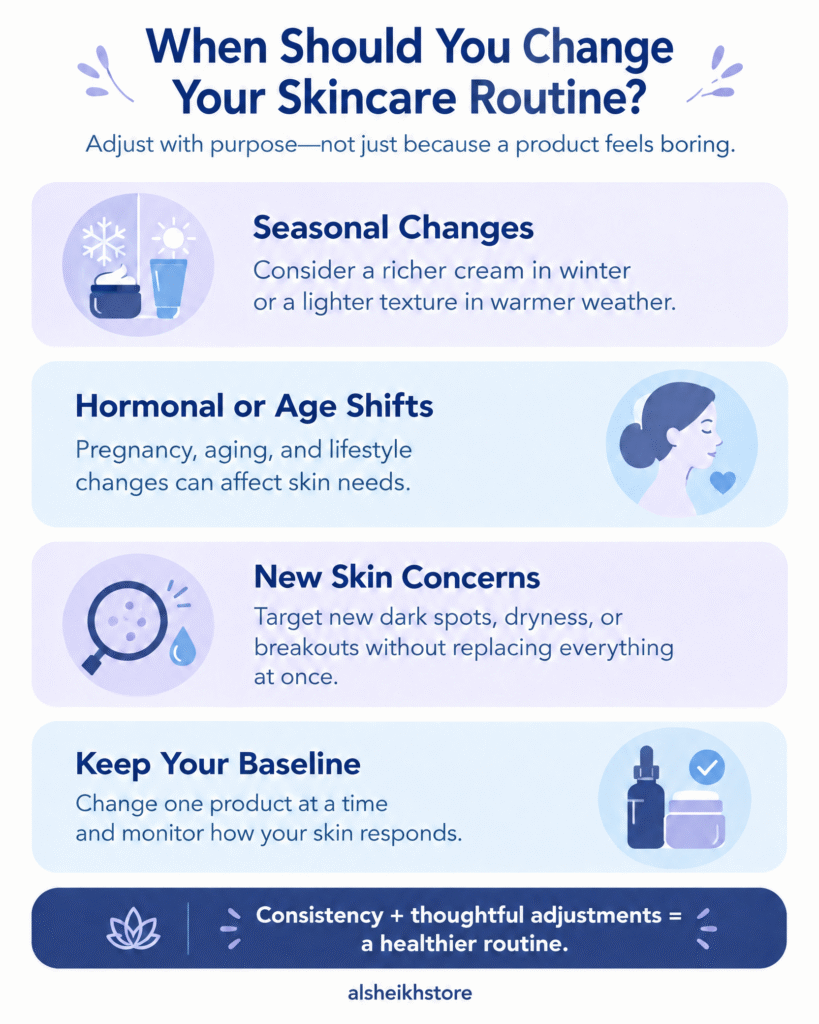
When Should You Actually Switch Skincare Products?
The answer is less often than the beauty industry would like you to think. Here are the legitimate reasons to change your routine versus the ones that do not hold up:
| Situation | Should You Switch? | What to Do Instead |
| Results seem to have plateaued | Usually no — document with photos before deciding | Take before-and-after photos and compare objectively. The ingredient is likely still working in maintenance mode. |
| Skin feels oilier or drier than before | Check the season first | Adjust routine for seasonal changes before switching products add a richer layer in winter, a lighter one in summer. |
| Product is expired or smells different | Yes — switch | Degraded products can cause irritation and are no longer effective. Replace with a fresh formula. |
| New skin concern has developed (pigmentation, redness, acne) | Yes — see a dermatologist | A new skin concern requires a new targeted active. Get advice before experimenting adding random actives often worsens the problem. |
| Consistent irritation or allergic reaction | Yes — immediately | Ongoing irritation is your skin telling you something is wrong. Stop the product and consult a dermatologist if it does not resolve within a week. |
| You simply want to try something new | Only if your current routine is working | If your skin is in a good place, the best routine is the one you have. Novelty for its own sake disrupts what is already working. |
The Right Way to Add New Products Without Disrupting What Works
If you do need to add a new product because of a new skin concern or because something expired the correct approach is careful and slow:
- Introduce one new product at a time. Never add multiple new products simultaneously if your skin reacts, you will not know which product caused it.
- Patch test first. Apply a small amount to the inner wrist or behind the ear for 24 to 48 hours before using on your face.
- Start with low frequency. New actives should be introduced two to three times per week and built up to daily use over four to six weeks.
- Give each product 28 days minimum before assessing results. Shorter than this and you are not evaluating the product you are evaluating your impatience.
- Document with photos. Take consistent photographs in the same lighting every four weeks. Skin improvement is gradual; without photos, it is genuinely difficult to remember what your skin looked like before.
For advice on building a hydration-focused routine that layers correctly without irritation, read: Is Hyaluronic Acid the Best Serum for Glowing Skin in Winter?
Skincare Ingredients That Work Better Together — and Combinations to Avoid
Good Combinations
- Hyaluronic Acid + Ceramides HA attracts water, ceramides lock it in. Pair as serum then moisturiser.
- Niacinamide + Retinol niacinamide reduces the redness and irritation retinol causes, making the combination more tolerable for sensitive skin.
- Vitamin C (morning) + Retinol (night) separate application windows prevents degradation and maximise both ingredients.
- AHA exfoliant + SPF AHAs make skin more photosensitive. Always follow with SPF 30 or higher in the morning.
Combinations That Can Irritate
- Retinol + AHA/BHA at the same time both increase cell turnover. Using together, especially at high concentrations, can cause significant irritation and barrier damage.
- Vitamin C + AHA/BHA at the same time low pH of exfoliating acids can degrade Vitamin C and increase irritation. Use separately or at different times of day.
- Benzoyl Peroxide + Retinol benzoyl peroxide degrades retinol molecules and makes both less effective. Use separately.
What People Search About Skin Tolerance to Skincare Products
Real search queries from 2026:
- Does your skin get used to skincare products?
- Does skin build a tolerance to retinol?
- Why has my moisturiser stopped working?
- Does Vitamin C serum lose effectiveness over time?
- Should you rotate skincare products?
- How long should you use a skincare product before switching?
- Does skin get used to niacinamide?
- Retinol stopped working what happened?
- Can skin build immunity to hyaluronic acid?
- How long does retinol take to work?
Frequently Asked Questions
Does your skin get used to skincare products?
No, not in the way most people think. Dermatologists confirm that skin does not become immune to or bored of cosmetic skincare ingredients. The mechanisms through which moisturisers, serums, and active ingredients work basic biochemistry and physics do not adapt or become less effective over time. What feels like a product stopping to work is almost always explained by something else: improved skin that no longer shows visible change, seasonal skin shifts, inconsistent use, or product degradation.
Does skin build a tolerance to retinol?
Skin adapts to retinol, but the adaptation reduces irritation, not efficacy. When you first start retinol, dryness and purging are normal. As you continue, the irritation fades because your skin has successfully adjusted to the ingredient. This is mistaken for tolerance. The retinol is still working. Peak results from retinoids come between 6 and 12 months of consistent use, far beyond the point where most people give up.
Why has my Vitamin C serum stopped brightening my skin?
The most likely explanation is that it already worked; the hyperpigmentation and dullness it was correcting have been corrected, and now it is maintaining that improvement invisibly. Take before-and-after photographs in consistent lighting every eight weeks. You may be surprised to see that improvement is still occurring. If the serum has turned orange or brown, it has oxidised and needs replacing with a fresh product.
Should you rotate skincare products to prevent tolerance?
No rotation is necessary and can actively disrupt a routine that is working. The idea comes from fitness (‘muscle confusion’) and does not apply to skin biology. If your current routine is producing good results, continue it. Change products only when a specific legitimate reason applies: new skin concern, product expiry, irritation, or a seasonal adjustment.
How long should I use a skincare product before deciding if it works?
Minimum 28 days for most moisturisers and gentle actives. 8 to 12 weeks for Vitamin C and exfoliating acids. 12 to 16 weeks for retinol at a low concentration. 6 to 12 months for prescription retinoids. Switching before these timelines have passed means you are not evaluating the product; you are evaluating impatience.
Are there any skincare ingredients that skin actually does build a tolerance to?
Yes one. Prescription-strength topical steroids (corticosteroids) can exhibit tachyphylaxis, a real reduction in effectiveness with repeated use, which is why dermatologists prescribe them in defined cycles. This does not apply to cosmetic skincare. No cosmetic moisturiser, serum, or over-the-counter active ingredient produces genuine immunity or tolerance in the skin.
More Skincare Guides at alsheikh.com.au
| Article | URL |
| The Best Charlotte Tilbury Magic Cream Dupe From $7 | https://alsheikh.com.au/charlotte-tilbury-magic-cream-dupe/ |
| Charlotte Tilbury Magic Cream 30ml — 2026 Review | https://alsheikh.com.au/ct-magic-cream-30ml-review/ |
| Is Hyaluronic Acid the Best Serum for Glowing Skin in Winter? | https://alsheikh.com.au/best-serum-for-glowing-skin-in-winter/ |
| Farmacy Honey Halo Review | https://alsheikh.com.au/farmacy-honey-halo-hydrating-moisturizer/ |
| Deeply Hydrating Moisturizer Review | https://alsheikh.com.au/deeply-hydrating-moisturizer/ |
| Korean Glass Skin — Anua Serum Review | https://alsheikh.com.au/korean-glass-skin/ |
Find Honest, Research-Backed Skincare Reviews at alsheikh.com.au
Every product and ingredient reviewed on alsheikh.com.au is assessed against current dermatological evidence. No sponsored content, no brand deals — just honest information.
Sources and References
Dr Lidia Maroñas, Oneskinmed — Hello Magazine interview, September 2026 · Dr Sandra Lee (Dr Pimple Popper) — SLMD Skincare, June 2025 · Reform Skincare — Does Your Skin Get Used to Products? 5 Myths Busted, May 2026 · American Academy of Dermatology — Retinoid usage guidelines · Skincare.com powered by L’Oreal — Expert Advice on skin adaptation

Best Amazon Beauty & Grooming Product Reviews