|
Getting your Trinity Audio player ready... |
Table of Contents
You’ve probably seen hyaluronic acid on every moisturiser, serum, and face mist label for the past few years. It’s the ingredient that’s supposed to be the answer to dry, dehydrated skin. So why do so many people with dry skin say it makes their skin feel even drier?
The answer isn’t that hyaluronic acid doesn’t work. It’s that most people use it in a way that actually works against their skin — especially in drier climates or air-conditioned environments that are incredibly common in Australia.
Hyaluronic acid is genuinely one of the best hydrating ingredients available. But it’s a tool, not a solution. Use it the wrong way and it pulls moisture out of your skin instead of into it.
In this guide, we’ll cover what hyaluronic acid actually is, why the ‘it makes my skin drier’ complaint is scientifically valid, the exact method that makes it work for dry skin, and which other ingredients to pair it with for real, lasting hydration.
The Science: What Hyaluronic Acid Actually Does
Understanding Hyaluronic Acid: More Than Just a Buzzword
Hyaluronic acid (HA) is a naturally occurring substance found throughout the human body — in your skin, joints, and connective tissue. In your skin specifically, it plays one critical role: holding onto water. HA can hold up to 1,000 times its own weight in water, which is why it became such a popular skincare ingredient.
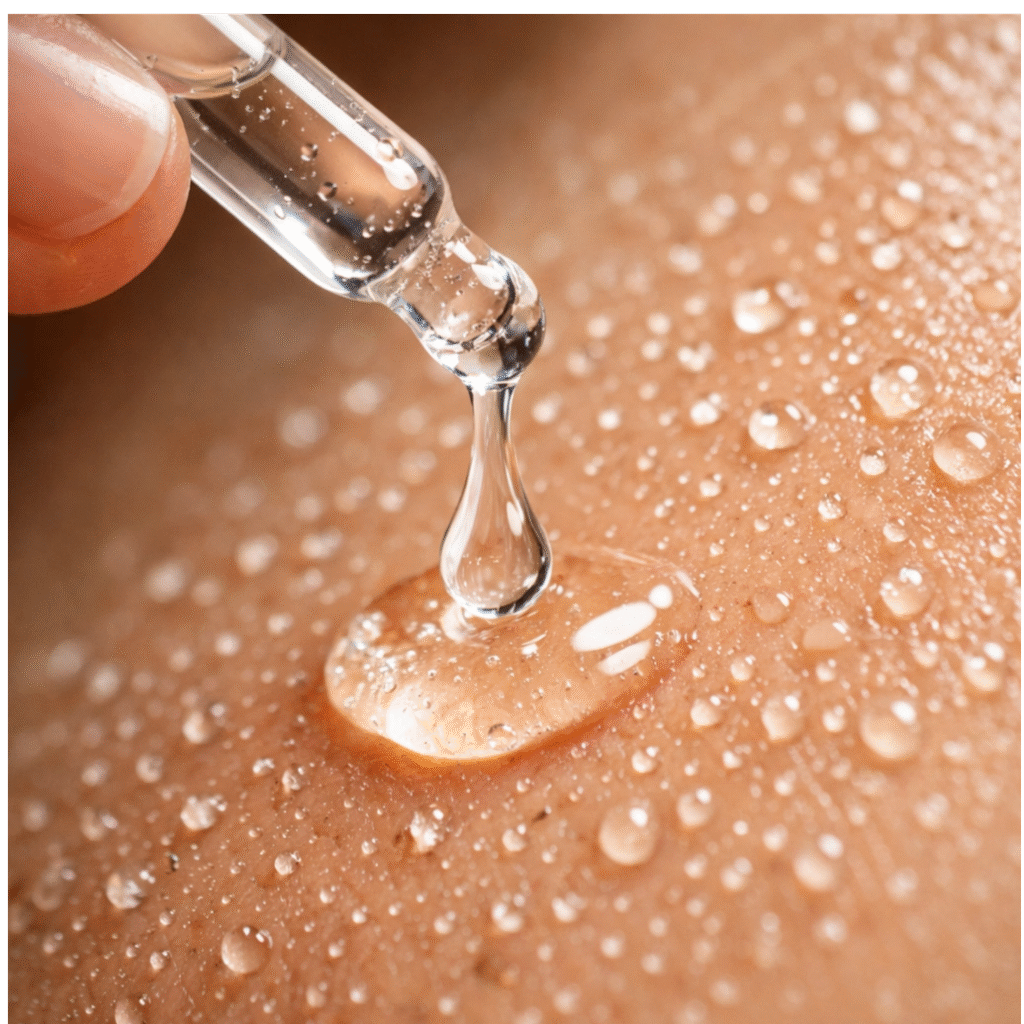
As a humectant, hyaluronic acid works by attracting water molecules and binding them to the skin. Humectants don’t add moisture — they draw it from somewhere else, either from the environment around you or from the deeper layers of your own skin. This distinction is the reason the ‘it dried out my skin’ complaint exists.
The Three Molecular Weights — Why This Matters
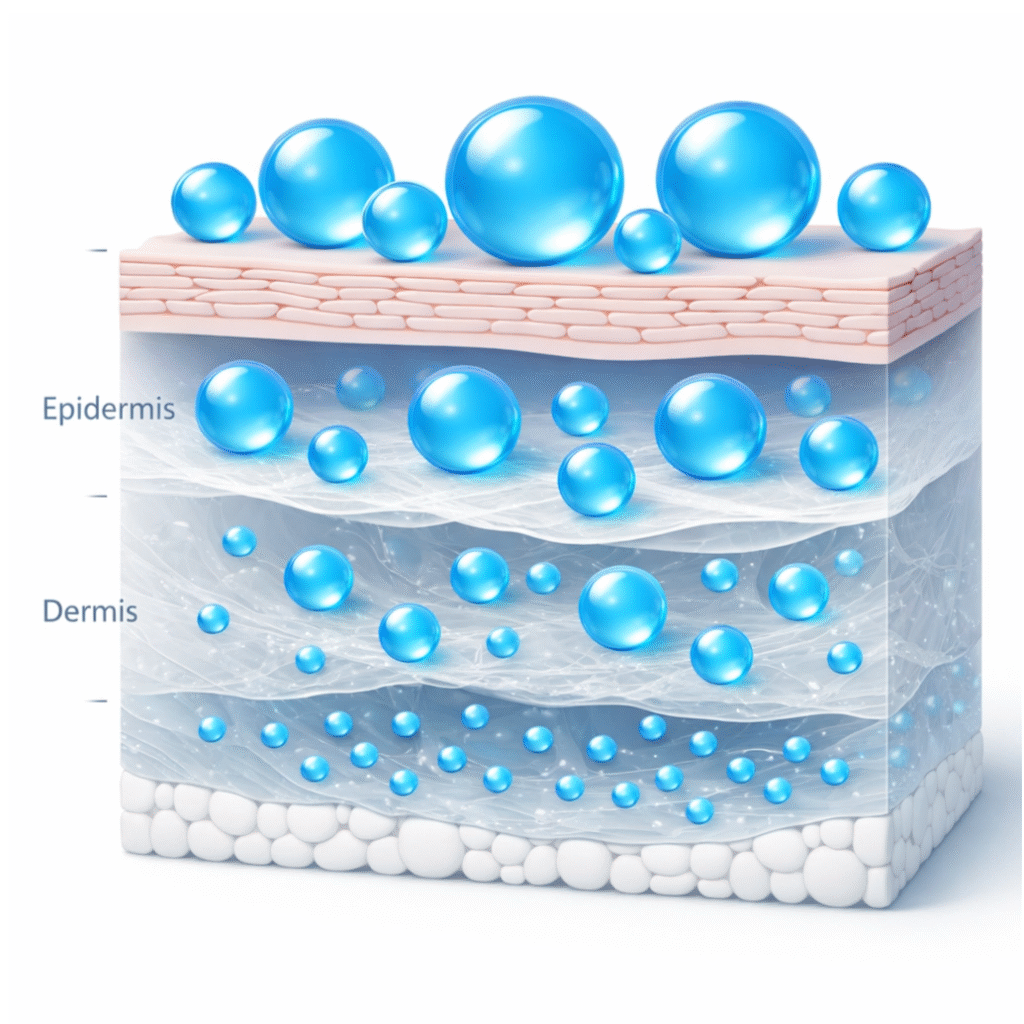
Not all hyaluronic acid is the same. Different molecular weights penetrate the skin at different depths:
- High molecular weight HA — sits on the skin’s surface. Creates a smoothing, plumping effect but doesn’t penetrate deeply. Best for immediate texture improvement.
- Medium molecular weight HA — penetrates into the upper layers of the epidermis. Helps with surface hydration that lasts longer.
- Low molecular weight HA — reaches deeper skin layers. Provides deeper hydration but can sometimes cause temporary sensitivity in reactive skin types.
Product tip: The best HA serums for dry skin contain multiple molecular weights — so they work at every depth simultaneously. Check the ingredient list for terms like ‘sodium hyaluronate’ (the salt form, which penetrates more easily) alongside ‘hyaluronic acid.’
The Dry Skin Problem: Why HA Can Backfire
Debunking the Myth: ‘Hyaluronic Acid Made My Skin Drier’
This isn’t a myth — it’s a real phenomenon with a real scientific explanation. And it happens more often in Australia than people realise, thanks to our dry climate, air conditioning, and harsh UV exposure.
The Low-Humidity Problem
Here’s what actually happens: hyaluronic acid is a humectant, which means it needs to pull water from somewhere. In an ideal scenario, it draws moisture from the humid air around you. But in a dry environment — low-humidity weather, an air-conditioned office, a heated room — there isn’t enough moisture in the air for HA to work with.
When the air is too dry, hyaluronic acid does something counterproductive: it draws moisture up from the deeper layers of your own skin, through the epidermis, and then allows it to evaporate from the surface. This is called transepidermal water loss (TEWL) — and it leaves your skin drier than before you applied the serum.
This is the exact scenario that causes the ‘hyaluronic acid dried out my skin’ experience. It’s not the ingredient failing — it’s the application method that’s missing a critical step.
The Missing Step: Occlusives
The fix is simple but non-negotiable. Hyaluronic acid must always be sealed in with a moisturiser — specifically one that contains either emollients or occlusives. Emollients (like squalane, ceramides, and fatty acids) fill in the gaps between skin cells. Occlusives (like shea butter, petrolatum, and some oils) create a physical barrier over the skin that prevents water from escaping. Choosing the right moisturiser to layer over your HA serum is just as important as the serum itself.
Hyaluronic acid hydrates. Your moisturiser locks it in. You need both. This is non-negotiable for anyone with dry skin.
The Right Method: How to Use HA for Dry Skin
The Correct Way to Apply Hyaluronic Acid for Dry Skin
The good news: fixing the application method takes about 30 seconds to learn and makes an immediate difference.
Step 1: Apply to Damp Skin — Always
This is the single most important change you can make. After cleansing, do not pat your face completely dry. Leave it slightly damp — or use a facial mist to dampen it — then apply your hyaluronic acid serum immediately. The serum now has surface moisture to work with instead of pulling from your deeper skin layers.
Apply HA to damp skin → seal with moisturiser → hydration stays locked in. Three steps, completely different result.
Step 2: The Layering Order
Skincare works in layers — thinnest to thickest, water-based to oil-based. Your HA serum is water-based and thin, so it goes first. Your moisturiser goes immediately after, while the serum is still slightly tacky. Don’t wait for it to dry completely. The correct layering order for your full routine matters more than most people realise — get it wrong and even great ingredients underperform.
- Gentle cleanser — removes surface impurities without stripping the barrier
- HA serum — applied to damp skin, patted in gently
- Moisturiser with emollients/occlusives — applied immediately while skin is still slightly damp
- SPF (morning) — non-negotiable, UV damage is the leading cause of accelerated skin ageing
Step 3: Morning AND Night
Dry skin benefits from HA twice daily. The morning application, sealed with SPF, helps skin cope with environmental exposure throughout the day. The evening application, sealed with a richer night cream, works with your skin’s natural overnight repair process. A consistent morning-to-night routine makes a measurable difference to chronic dryness within 2–4 weeks.
Step 4: Concentration and Formulation
More is not always better with HA concentration. A well-formulated 1–2% hyaluronic acid serum with multiple molecular weights will outperform a poorly formulated 5% serum every time. What matters is the supporting ingredients — are there ceramides in the formula? Glycerin? Panthenol? These work synergistically with HA to boost and prolong the hydration effect.
🌿 Beyond HA: The Best Hydrating Ingredients for Dry Skin
The Full Hydration Toolkit: Ingredients That Work With (and Without) Hyaluronic Acid
Hyaluronic acid works best as part of a hydrating system, not as a standalone solution. Here are the ingredients that pair best with it — and what each one actually does. If your skin has been persistently dry despite using multiple products, the issue is often a compromised skin barrier — which these ingredients directly address.
Ceramides — The Barrier Builders
Ceramides are lipids that naturally make up around 50% of your skin barrier. They act like the ‘mortar’ between skin cells, keeping the structure intact and preventing water from escaping. When your ceramide levels are depleted — through over-exfoliation, harsh cleansers, or ageing — your skin barrier becomes leaky, and no amount of hydrating serum will keep your skin moisturised.
For dry skin, a ceramide-rich moisturiser layered over your HA serum is one of the most effective combinations available. Natural ingredients like ceramides work especially well for sensitive and dry skin types because they work with your skin’s existing structure rather than against it.
Squalane — The Lightweight Emollient
Squalane is a stable, plant-derived oil that mimics your skin’s own natural lipids. Unlike heavier oils, it absorbs quickly, doesn’t feel greasy, and works brilliantly as an occlusive layer over hyaluronic acid. It fills in the spaces between skin cells, smooths texture, and creates a light barrier against water loss. It’s suitable for all skin types including oily-dry combinations.
Glycerin — The Classic Humectant
Glycerin is one of the original humectants and still one of the most effective. It’s gentler than HA, draws moisture from the air effectively even in moderate humidity, and works well in combination with HA to provide layered humectancy. Most well-formulated moisturisers already contain glycerin — it’s a sign of a good base formula.
Ectoin — The 2026 Trending Ingredient
Ectoin is a naturally derived amino acid compound that’s gaining serious traction in 2026 skincare. It forms a protective shell around skin cells, shielding them from environmental stress (UV, pollution, temperature extremes) while providing deep hydration. It’s particularly valuable for Australian skin because of our high UV exposure and climate variability. Look for it in serums and SPF formulations.
Peptides — For Dry AND Ageing Skin
Peptides are short chains of amino acids that signal the skin to produce more collagen and elastin. For dry skin specifically, peptides help repair the skin barrier over time and support the lipid structure that keeps moisture locked in. For those also concerned about ageing alongside dryness, a peptide serum used alongside your HA routine is one of the most efficient combinations in a routine.
When to Reconsider Your Approach
When Hyaluronic Acid Isn’t Enough — What to Do
If you’ve applied HA correctly — damp skin, sealed immediately with moisturiser, twice daily — and your skin is still persistently dry after 4–6 weeks, the issue likely isn’t the HA. It’s your skin barrier. A compromised skin barrier cannot hold onto moisture regardless of what you apply. The barrier itself needs repair first.
Signs Your Barrier Is Compromised (Not Just Dry)
- Skin feels tight and uncomfortable even immediately after applying moisturiser
- Redness or sensitivity that wasn’t there before
- Products that previously worked well now cause stinging or irritation
- Texture changes — rough, flaky patches that don’t respond to exfoliation
- Breakouts appearing alongside the dryness
If these sound familiar, switching to a barrier-repair focused routine is a more effective step than adding more hydrating products. Less, but better — this is the skinimalism principle that consistently outperforms 10-step routines for compromised skin.
The Barrier-First Approach
Prioritise products rich in ceramides, fatty acids (linoleic acid, oleic acid), and cholesterol — these are the three lipids your skin barrier is made of. A barrier-repair moisturiser used consistently for 4–8 weeks can restore the skin’s ability to hold onto moisture, after which HA works far more effectively.
⚠️ Do not exfoliate while repairing a compromised barrier. Acids and physical exfoliants remove the very lipid layer you are trying to rebuild. Pause exfoliation, focus on barrier repair, then reintroduce exfoliation very gradually.
If dryness is chronic, severe, or accompanied by itching, scaling, or other unusual symptoms, see a dermatologist. Some conditions — eczema, psoriasis, perioral dermatitis — can mimic dry skin but require different treatment entirely. And if you’re wondering whether your current routine might be causing more harm than good, a double cleansing check is often the place to start — over-cleansing is one of the most common causes of acquired barrier damage.
🇦🇺 The Australian Skin Context
Using Hyaluronic Acid in the Australian Climate
Australia’s climate creates specific challenges for hyaluronic acid users that aren’t discussed enough. The combination of high UV exposure, variable humidity (particularly in cities like Melbourne and Adelaide), and the prevalence of air conditioning creates ideal conditions for the ‘HA pulling moisture from deep skin’ problem.
What to Do in Low-Humidity Conditions
- Layer HA under a richer moisturiser than you think you need — err on the side of more occlusive in air-conditioned environments
- Keep a facial mist at your desk to re-dampen skin before the afternoon reapplication if needed
- Choose an HA serum that also contains glycerin — glycerin is more effective than HA alone in lower humidity conditions
- In very dry conditions, consider applying a thin layer of squalane oil over your moisturiser for additional occlusion
SPF Is Non-Negotiable — Even With HA
UV radiation degrades hyaluronic acid in the skin. If you’re using HA to improve hydration but skipping SPF, you’re working against yourself. Australian UV is among the highest in the world — your travel skincare kit and your daily routine both need broad-spectrum SPF 50 as the final morning step, applied over your HA serum and moisturiser.
What to Look For in Products
Choosing the Right Hyaluronic Acid Products for Dry Skin
Not all HA products are equal. Here’s what separates a well-formulated product from one that will underperform for dry skin. And if you’re evaluating whether an expensive moisturiser is actually worth it, the Charlotte Tilbury Magic Cream review is a good case study in what a premium formula actually delivers for dry, ageing skin.
In a Hyaluronic Acid Serum, Look For:
- Multiple molecular weights listed (high, medium, and low)
- Glycerin in the first half of the ingredient list — it amplifies HA’s humectant effect
- Panthenol (vitamin B5) — soothing and also a humectant
- Ceramides, niacinamide, or peptides as bonus barrier-supporting ingredients
- No alcohol denat. in the first five ingredients — alcohol-heavy formulas evaporate quickly and worsen transepidermal water loss
In the Moisturiser You Layer Over It, Look For:
- Ceramides (NP, AP, or EOP) — barrier repair
- Shea butter, squalane, or jojoba oil — emollient and occlusive
- Fatty acids — linoleic acid and oleic acid support barrier structure
- Dimethicone or petrolatum if you need maximum occlusion (for very dry or eczema-prone skin)
If you’re building a routine from scratch and want to understand how each product category fits together, the 4-2-4 cleansing method guide is a good starting point — it covers how cleansing affects moisture retention, which is often the overlooked first step in treating dry skin.
Questions People Always Ask About HA and Dry Skin
Can I use hyaluronic acid if I have both oily and dry skin?
Yes — combination skin often responds very well to HA because it provides hydration without added oil. Apply it to the drier areas and seal with a lightweight gel moisturiser. If the T-zone is consistently oily despite hydration, an oil-free face wash may be a better first step than adjusting your HA routine.
How often should I use hyaluronic acid?
Twice daily is the standard recommendation — morning and evening. HA is gentle enough for daily use even for sensitive skin types. The key is always to seal it with a moisturiser immediately after application, especially if your environment is low-humidity.
Should I use HA before or after retinol?
Before. Apply HA to damp skin, let it absorb for 30–60 seconds, then apply retinol over the top. HA acts as a buffer that reduces the dryness and irritation that retinol can cause, making it much more tolerable, especially when you’re introducing it for the first time. This layering approach also works well in a complete morning and evening routine where multiple actives need to coexist.
Is hyaluronic acid safe during pregnancy?
Yes. Hyaluronic acid is one of the few skincare actives universally considered safe during pregnancy. It’s naturally occurring in the body, doesn’t penetrate systemically, and has no known risks. If you’re pregnant and looking to maintain skin hydration while avoiding retinoids and certain acids, HA-centred hydration is a sensible pivot.
Why is my skin still dry after using HA every day?
Three most common reasons: (1) You’re applying it to dry skin — apply to damp skin instead. (2) You’re not sealing it with a moisturiser — apply moisturiser within 60 seconds of the serum. (3) Your skin barrier is damaged and needs repair before any humectant will work properly. See the barrier repair section above. If none of these apply and you’ve been consistent for 6+ weeks, a skincare routine reset focused on fewer, better products may reveal that one of your other products is undoing the hydration work.
What’s the difference between hyaluronic acid and sodium hyaluronate?
Sodium hyaluronate is the salt form of hyaluronic acid. It has a smaller molecular size, which means it penetrates more easily into the skin. Both are effective, and many products contain both forms. When you see sodium hyaluronate on an ingredient list, it’s a good sign — it’s often better absorbed than hyaluronic acid alone.
FAQ — Quick Answers
Q: Is hyaluronic acid good for dry skin?
A: Yes — when applied correctly. Apply to damp skin, seal immediately with a moisturiser containing emollients or occlusives, and use twice daily. Skip any of these steps in a dry climate and HA can worsen dryness by drawing moisture up from deeper skin layers.
Q: What moisturiser should I use over hyaluronic acid?
A: Choose one rich in ceramides, fatty acids, or squalane. These ingredients create a barrier over the HA that prevents transepidermal water loss. A guide to choosing the right face moisturiser covers exactly what to look for based on your skin type.
Q: Can hyaluronic acid replace my moisturiser?
A: No. Hyaluronic acid is a humectant — it attracts water. Your moisturiser is an emollient/occlusive — it locks water in. They perform different functions. Using HA without a moisturiser on top is like filling a bucket with a hole in it. Both are required.
Q: Which is better for dry skin — hyaluronic acid or glycerin?
A: Both work. Glycerin performs slightly better in lower-humidity conditions because it draws moisture from the air more efficiently than HA at lower humidity levels. HA plumps the skin more visibly. The best approach for dry skin is a product that contains both — they work synergistically.
Q: Can I use hyaluronic acid with vitamin C?
A: Yes, and it’s an excellent pairing. Apply vitamin C serum first (it works best on clean, dry skin), wait 30 seconds, then apply HA to damp skin and seal with moisturiser. This combination addresses both antioxidant protection and hydration simultaneously — two of the highest priorities for any well-rounded skincare routine.
Q: Does hyaluronic acid help with fine lines?
A: Short-term, yes — by plumping the skin with water, HA temporarily reduces the appearance of fine lines caused by dehydration. Long-term, consistent hydration also helps prevent the formation of dehydration lines. For actual anti-ageing results, pair HA with retinol or peptides for structural collagen support.
Conclusion
Is Hyaluronic Acid Good for Dry Skin? Yes — With One Condition
Hyaluronic acid is one of the most effective hydrating ingredients available for dry skin. The science is solid, the results are real, and the complaints about it ‘making skin drier’ are completely solvable with one change in application method.
The condition: always seal it with a moisturiser. Apply to damp skin, layer your moisturiser immediately over the top, and let the two work together. Do that consistently, twice a day, and HA will do exactly what it promises.
If your skin is still struggling despite doing everything right, check your skin barrier first. A barrier-first approach — reducing your routine to the essentials, adding ceramides, pausing exfoliation — will make everything else work better, including your HA serum.
Great skin doesn’t come from having the most products. It comes from understanding what your skin actually needs and giving it exactly that — consistently.
Start with the basics: a gentle cleanser, hyaluronic acid applied to damp skin, a well-chosen moisturiser, and SPF. That four-step foundation handles the vast majority of dry skin concerns. Build from there only once you know it’s working. Browse our full skincare range for curated products that pair well with this approach.
Related Reading on ALsheikh
Everything below is live on alsheikh.com.au — all relevant to the hydration and skincare topics covered in this guide:
| Article | Why It’s Relevant |
|---|---|
| Why Your Skin Barrier Is the Secret to a Lasting Glow | The foundation of all hydration — read this first |
| Choosing the Right Face Moisturiser | How to pick the right seal for your HA serum |
| Skinimalism 2.0: Why Less Is More for Healthy Skin | Barrier repair approach for persistently dry skin |
| The Best Skincare Routine for 24/7 Glow | Complete routine with correct layering order |
| From Day to Night: 2-Step Skincare Routine | Minimal routine that still delivers results |
| Double Cleansing Ritual for Radiant Healthy Skin | How cleansing affects your skin barrier and hydration |
| How to Pick an Oil-Free Face Wash | For combination skin — dry patches + oily T-zone |
| Why Natural Ingredients Work Better for Sensitive Skin | Ceramides and barrier-friendly ingredients explained |
| Skincare Tips for Ageing Skin | HA + peptides for dry + ageing concerns combined |
| The 4-2-4 Cleansing Method | How cleansing routine affects moisture retention |
| Best Skincare Routine with The Ordinary Glycolic Acid | How exfoliation fits into a hydration-first routine |
| The Gentler Glow-Up: Choosing the Right Exfoliant | When and how to exfoliate without damaging barrier |
| The Ordinary Brightening Exfoliant | A gentle exfoliant that works alongside HA routines |
| Charlotte Tilbury Magic Cream Review | Premium moisturiser review — worth it for dry skin? |
| Travel Skincare Essentials to Prevent Dull Skin | HA in low-humidity travel conditions |
| Investing in Skincare for 2026: Luxury vs Budget | Do expensive HA serums actually work better? |
| Shop All Skincare | Browse hydrating serums and moisturisers |
ALsheikh Store | alsheikh.com.au | March 2026 | Evidence-Based Skincare Guide

Best Amazon Beauty & Grooming Product Reviews